

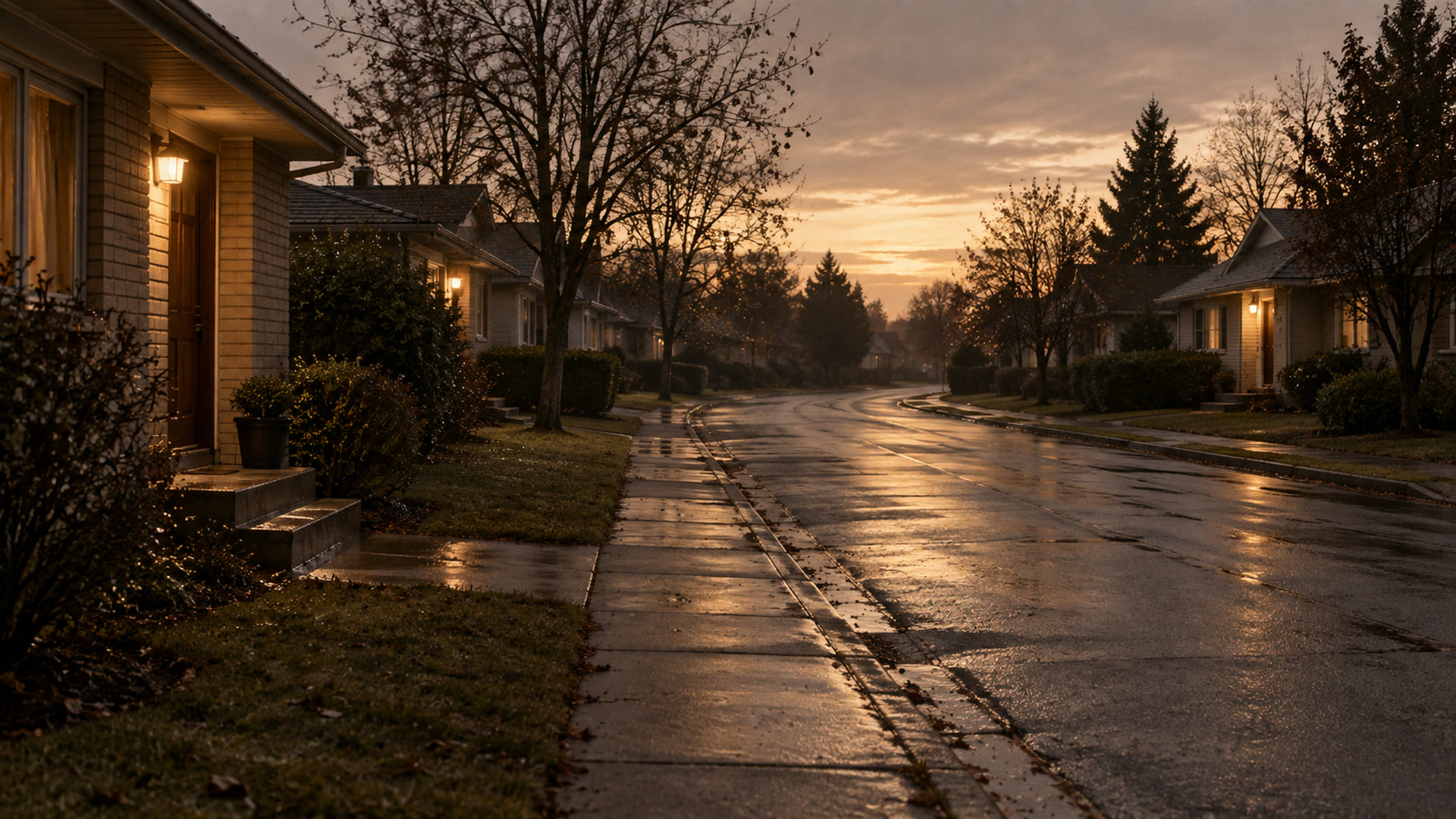
When a death comes with no warning, what people write afterward is often about the ordinary things that stopped. One person wrote on Reddit's r/GriefSupport, "my first thought it to text him." Another Reddit user, whose husband died of a heart attack, wrote, "we didn't get to kiss goodnight...how does one go on ?"
And someone whose grandmother died of a cardiac arrest asked on Reddit, "how in the good world can life br this random and crazy without giving any warning signs and just... End?"
If you are in the first hours or days and reading is hard, one verse is enough to start with.
If you only have a minute
One verse for now
Psalm 34:18, "Yahweh is near to those who have a broken heart."
When the news came suddenly
Job 1 and 2 Samuel 18 record the moment a messenger arrives.
If blame is on your mind
In Luke 13:1-5, Jesus answers, "I tell you, no."
The if-only questions
What they are, and what they do not mean.
If it is getting harder
The crisis lines at the end name their countries.
Psalm 34:18, for the first hours
The passage this site offers for grief, in the World English Bible, is one verse:
Yahweh is near to those who have a broken heart, and saves those who have a crushed spirit.
The verse before it says the righteous cry, "and Yahweh hears, and delivers them out of all their troubles," and the verse after says the same again, so the psalm holds nearness and rescue together. Verse 18 speaks of nearness now. It gives no timescale and no reason for anyone's death. The page on losing a parent reads it in its whole psalm.
If you can manage anything tonight, read the verse once, slowly. The reflection that goes with it asks what it would mean to let nearness, rather than explanation, be enough today.
When the news arrives
The Bible records the moment bad news comes without warning more than once.
In Job 1, a messenger reaches Job with news of stolen animals and servants killed. "While he was still speaking," another arrives, then another, each ending, "I alone have escaped to tell you." The last says that while Job's sons and daughters were eating together, "there came a great wind from the wilderness, and struck the four corners of the house, and it fell on the young men, and they are dead." Job "arose, and tore his robe, and shaved his head, and fell down on the ground, and worshiped" (Job 1:20).
In 2 Samuel 18, King David waits for news of a battle in which his son Absalom fought against him. He sits "between the two gates" as runners come into sight, and asks each one, "Is it well with the young man Absalom?" The second runner's answer leaves no doubt. David "went up to the room over the gate, and wept," saying, "My son Absalom! My son, my son Absalom! I wish I had died for you, Absalom, my son, my son!" (2 Samuel 18:33).
If you remember exactly where you were when the call came, both scenes know that moment: the waiting, the question, the answer that cannot be taken back.
What Job said, and how it is read
Job's next words are often repeated after a death: "Yahweh gave, and Yahweh has taken away. Blessed be Yahweh’s name" (Job 1:21). Traditions read them differently. The Greek Orthodox Archdiocese of America says "Job believed that it was God Who took all these things away from him." David Guzik at Enduring Word says Job mourned and "decided to worship God despite his circumstances and feelings," and separates God's ultimate control from immediate responsibility. Matthew Henry calls Job's worship "gracious submission."
These are words one man said about his own losses. They are not a sentence anyone has to say, and not an account of why your person died.
Were they worse than anyone else?
Beneath many sudden deaths sits a question about blame. In Luke 13, people tell Jesus about Galileans killed by Pilate, and he raises eighteen people killed when a tower fell:
Now there were some present at the same time who told him about the Galileans, whose blood Pilate had mixed with their sacrifices. Jesus answered them, “Do you think that these Galileans were worse sinners than all the other Galileans, because they suffered such things? I tell you, no, but unless you repent, you will all perish in the same way. Or those eighteen, on whom the tower in Siloam fell, and killed them; do you think that they were worse offenders than all the men who dwell in Jerusalem? I tell you, no, but, unless you repent, you will all perish in the same way.”
The call to repent comes in verses 3 and 5. The US Catholic bishops' note says the victims "should not be considered outstanding sinners who were singled out for punishment." Pope Benedict XVI's 2007 Angelus reads it as Jesus commenting on events of his day, and Guzik reads it as a call to urgency. The passage answers the question of blame, and names no cause for any death.
"Time and chance"
Ecclesiastes names suddenness outright: "time and chance happen to them all," and "man also doesn’t know his time," snared "when it falls suddenly on them" (Ecclesiastes 9:11-12). Guzik reads it as the Preacher's view "under the sun," quoting Derek Kidner that time and chance "both have a way of taking matters suddenly out of our hands." John Gill reads apparent chance as providential decree. The two do not agree.
What the first days can be like
Material from Marie Curie, in a report written for homelessness services, says people are "usually in deep shock as well as suffering from grief," with "little to no opportunity to prepare for the loss, say good-bye, finish unfinished business or prepare for bereavement." The NHS lists "shock and numbness" as "usually the first reaction to loss."

After a sudden death, ordinary things are often still where they were put down.
The emergency department guide from Gloucestershire Hospitals in England says some people "can feel so numb or in such a state of shock that everything just seemed so unreal." It has a section headed "Unfinished conversations," for what there was no chance to say.
The if-only questions
Gloucestershire Hospitals says people may "repeatedly ask if there was anything that could have been done to have changed things in some way, or perhaps, even to have prevented the death." The NHS lists guilt about "not being able to stop your loved one dying."
Those questions come to people who were there and people who were not. One wrote on Reddit, "I performed CPR on him for 30 minutes before paramedics arrived, but he ultimately died in my arms." A widow wrote in another Reddit thread, "He was alone in the hospital when it happened."
The sources describe these questions, and this guilt, as part of sudden grief. Describing a feeling is different from finding that anything could have been done.
If there is an inquest (England and Wales)
In England and Wales, Gloucestershire Hospitals says an unnatural death requires an inquest after a post-mortem, and "the death cannot be registered until the inquest has finished," though a temporary certificate can be issued. Brake, which supports families after road crashes, says coroners investigate "most road deaths." This can delay the funeral; the funeral director usually talks to the coroner about timing. Procedures differ elsewhere.
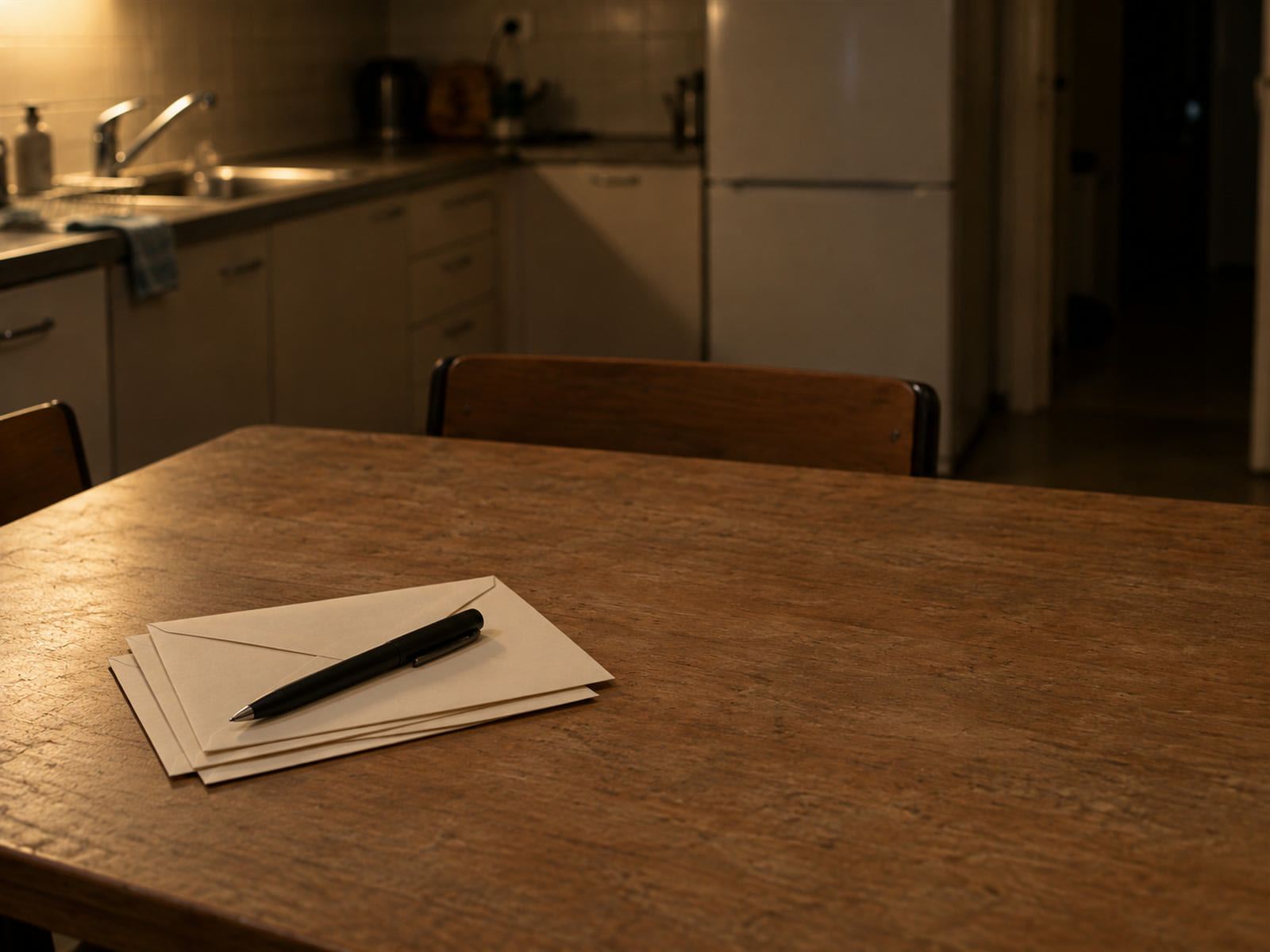
The first weeks can bring forms and phone calls alongside the grief.
When someone says "God has a plan"
"God has a plan" and "everything happens for a reason" are often said after a sudden death. One person wrote on Reddit's r/GriefSupport, "Shaun randomly dying stings way less than his death being brought on by a god with a plan." Psalm 34:18 offers nearness and suggests no reason for any death. The passages above do the same: Job and David grieve, Luke 13 answers the question of blame, and none names a cause. If you are finding words for someone else, see what not to say to someone grieving, and for readings, Bible verses for a funeral.
If the death was by suicide
The World Health Organization and the International Association for Suicide Prevention ask for plain words, "died by suicide," and warn against settling on a single reason. Nobody is owed the details. In the UK, Survivors of Bereavement by Suicide has a helpline on 0300 111 5065. In the United States, the American Foundation for Suicide Prevention has a page for loss survivors.
Questions people ask
Is there a short verse to read in shock? Psalm 34:18 is one line: "Yahweh is near to those who have a broken heart."
Does the Bible say why a sudden death happens? None of the passages here gives a reason for any particular death. In Luke 13:1-5, Jesus says people killed suddenly were not worse than others.
How long does grief last after a sudden death? There is no set length. The NHS says a sudden death makes prolonged grief disorder more likely; the diagnosis needs intense grief lasting more than six months under ICD-11, and at least twelve months for adults under DSM-5-TR. For later on, there is a page on grief that comes back months later.
Where to go next
One small step is enough: read Psalm 34:18 with the verses around it. For something else you are carrying, Bible Nudge takes a line in your own words and returns one passage with its surroundings. Find a passage.
If grief has turned into thoughts of ending your life, please reach a person tonight. In the United States, call or text 988 for the 988 Suicide and Crisis Lifeline. In Canada, call or text 9-8-8. In the UK and Republic of Ireland, Samaritans is on 116 123. In Australia, Lifeline is 13 11 14. Anywhere else, Find A Helpline lists services by country. In the UK, Sudden is on 0800 2600 400 for anyone bereaved suddenly, and Brake is on 0808 8000 401 after a road death.
Words that come up here
Tap a term to see what it means.
Siloam. A place in Jerusalem where, Luke 13 says, a tower fell and killed eighteen people.