

First, one thing to know. If your spouse controls who you see, checks your phone or frightens you, the National Domestic Violence Hotline describes behavior like that as emotional abuse, which needs no violence to count. In the United States the Hotline is on 800-799-7233, or text START to 88788. In the UK, the National Domestic Abuse Helpline, for women, is on 0808 2000 247 and the Men's Advice Line on 0808 801 0327. In Australia, 1800RESPECT is on 1800 737 732. More routes by country are at the end. The Hotline also warns that "Your computer and cell phone use can be monitored without you knowing it," and that private or incognito mode does not completely erase your history.
For everyone else reading this, the words people use are often plain. One person wrote on Reddit, "I often feel like I am alone in my marriage." Another wrote there, "To be lonely in your own marriage is the worst kind of loneliness as it wasn't expected." A spouse caring for a partner with Alzheimer's, in Reddit's r/Alzheimers, put it as "I'm their caregiver - not their lover anymore." And someone married to a person of another faith wrote in r/Catholicism, "I feel the loneliness of going through the motions of our faith alone." If one of those is close to yours, the Bible has a prayer for exactly this kind of desolation, and a woman who was loved by her husband and still wept alone.
If you only have a minute
Words to pray
Psalm 25:16-17, "Turn to me, and have mercy on me, for I am desolate and afflicted."
Loved and still alone
Hannah in 1 Samuel 1, whose husband loved her and did not reach her sorrow.
A verse often quoted at you
Genesis 2:18, and why Christian writers disagree about what it promises.
If a spouse is ill
A study of partners caring for someone with dementia, and a page written for them.
If you feel unsafe
Domestic abuse and crisis lines at the end name their countries.
A prayer for when you are desolate
The passage this site offers for loneliness is Psalm 25:16-17:
Turn to me, and have mercy on me, for I am desolate and afflicted. The troubles of my heart are enlarged. Oh bring me out of my distresses.
It asks God to turn toward someone who is desolate, and a married person can pray it as fully as anyone. The verses around it speak of waiting, of enemies, and of taking refuge, and the psalm ends still asking. You can pray Psalm 25:16-17 as it stands, in the first person, without adding anything, and the loneliness resources gather more.
One way to use it tonight is to read the two verses aloud, or in your head if the house is not quiet, and stop at "desolate." It is a plain word for something that can be hard to say to anyone.
Hannah, who was loved
The passage in Scripture closest to this situation may be the opening of 1 Samuel. Elkanah has two wives, and Hannah has no children. Each year at the festival he gives her a double portion, "for he loved Hannah" (1 Samuel 1:5). The other wife provokes her year after year, and Hannah weeps and will not eat.
Then her husband speaks: "Hannah, why do you weep? Why don’t you eat? Why is your heart grieved? Am I not better to you than ten sons?" (1 Samuel 1:8). He means it kindly, and it does not reach her. The next verses say she got up from the meal, "was in bitterness of soul, and prayed to Yahweh, weeping bitterly" (1 Samuel 1:10). She prays so quietly that "only her lips moved, but her voice was not heard" (1 Samuel 1:13), and the priest who sees her thinks she is drunk.
The text sets down, without blaming either of them, a loving husband who did not reach his wife's sorrow, and a wife who took that sorrow somewhere else to pray. "I poured out my soul before Yahweh," she tells the priest (1 Samuel 1:15).

Two people can share a table and still be a long way apart.
What loneliness in a marriage is like
The Gottman Institute describes it as "the feeling of being emotionally disconnected from your partner, even when you’re physically together," and says couples can become roommates who manage logistics while connection fades. Relate, the UK relationship charity, says emotional intimacy is not only sexual, and describes it as being able to be "open and vulnerable" with a partner. Both are descriptions from organizations that work with couples, not diagnoses.
Faith can be part of it. Pew Research Center found that 26 percent of married adults in the US have a spouse with a different religious identity, and that same-faith spouses are more likely to talk about religion often. Pew is careful to say this does not show that a mixed marriage causes anything.
When your spouse is ill
If your husband or wife has dementia, the loneliness can arrive while you are doing everything for them. Brown and colleagues, using the English Longitudinal Study of Ageing, found that partners caring for someone with dementia were more likely to report depressive symptoms later, and that loneliness accounted for about a third of that link. That is one study of older partnered caregivers in England, and an association rather than a forecast about you. The page for dementia caregivers is written for that situation.
The verse people quote about being alone
Genesis 2:18 is often said to married people: "It is not good for the man to be alone. I will make him a helper comparable to him." In its setting, God speaks it before the woman is made, and before the chapter closes the man and his wife "will be one flesh." It describes a beginning, before any marriage had a history.
Christian writers disagree on what it promises. A Bible.org writer says the woman was created for the purpose of ending Adam's loneliness. Christianity Today answers that "God did not design marriage for that end," and notes that Genesis says Adam was alone, not lonely. That disagreement is yours to weigh up.
Other places the Bible names this
Two more passages may be worth reading as recognition, each in its own setting. In Psalm 55, the wound comes from someone close: "But it was you, a man like me, my companion, and my familiar friend. We took sweet fellowship together. We walked in God’s house with company" (Psalm 55:13-14). The psalm names a close companion, which may be why it sounds so familiar.
In the Song of Songs, a love poem, a woman opens the door too late: "I looked for him, but I didn’t find him. I called him, but he didn’t answer" (Song of Songs 5:6). It is longing inside love, written as poetry.

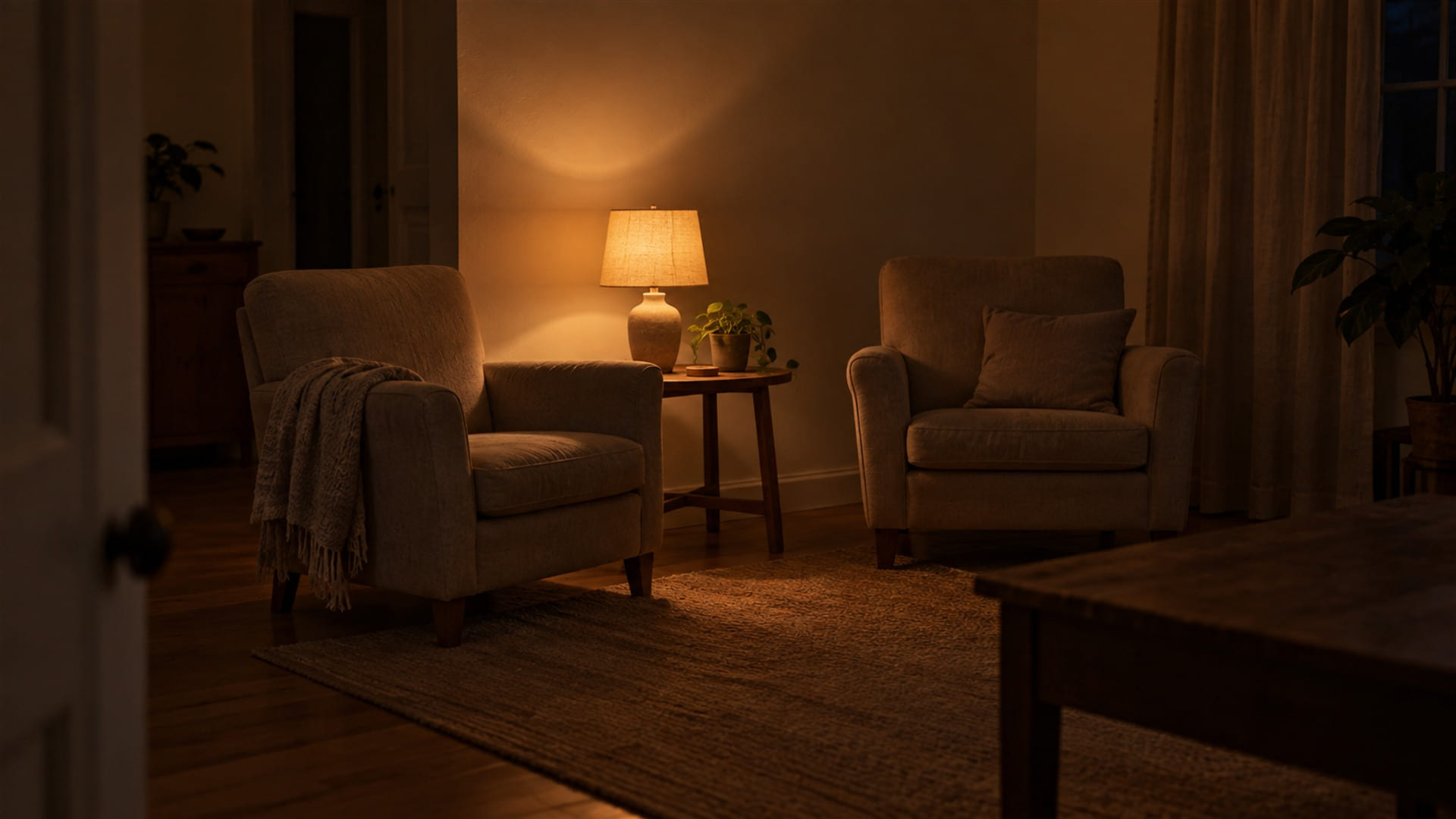
Much of this reading happens late, on one side of the bed.
Passages used to say "stay and try harder"
Ephesians 5, 1 Peter 3 and 1 Corinthians 7 are the passages most often used to tell a spouse to submit or stay. The US Catholic bishops write that "Men who abuse often use Ephesians 5:22, taken out of context", and point to the verse before it, "subjecting yourselves to one another in the fear of Christ" (Ephesians 5:21). The National Domestic Violence Hotline includes using religious texts to excuse abuse in its definition of spiritual abuse. In Catholic canon law, canon 1153 says a spouse who causes grave danger to the other gives the other "a legitimate cause for leaving."
Traditions read these chapters differently. The Council on Biblical Manhood and Womanhood's Danvers Statement describes "loving, humble headship" for husbands and "intelligent, willing submission" for wives. Christians for Biblical Equality reads Ephesians 5:21 as mutual submission and warns against telling victims to submit to abusive husbands. The Assemblies of God says the passage calls "both partners" to mutual submission and that husbands must not "abuse or mistreat" their wives.
Questions people ask
Is there a prayer for loneliness in marriage? Psalm 25:16-17 can be prayed word for word. Hannah prayed silently, with only her lips moving, and 1 Samuel 1 treats that as prayer.
Does Genesis 2:18 mean a spouse should end my loneliness? The verse says it was not good for the man to be alone. Whether marriage is meant to end loneliness is an interpretation, and Christian writers disagree about it.
Is emotional distance the same as abuse? No. The Gottman Institute describes disconnection between partners, while the Hotline defines emotional abuse as behavior meant to control, isolate or frighten, and the two can feel alike from inside.
Where to go next
If you want one next step, read Psalm 25:16-17 in its setting. The page on loneliness and sadness goes wider than marriage. Bible Nudge can also take a line about what you are carrying and come back with one passage and what surrounds it. Find a passage.
If you are being controlled, isolated or frightened at home, in the United States the National Domestic Violence Hotline is on 800-799-7233, or text START to 88788. In the UK, the National Domestic Abuse Helpline, for women, is on 0808 2000 247, the Men's Advice Line on 0808 801 0327, and Galop, for LGBT+ people, on 0800 999 5428. In Australia, 1800RESPECT is on 1800 737 732. In Canada, ShelterSafe finds shelters by province and territory. Elsewhere, UN Women's directory lists services by country. If you are in immediate danger, call your local emergency number.
If loneliness has turned into thoughts of ending your life, please reach a person tonight. In the United States, call or text 988 for the 988 Suicide and Crisis Lifeline. In Canada, call or text 9-8-8. In the UK and Republic of Ireland, Samaritans is on 116 123. In Australia, Lifeline is 13 11 14. Anywhere else, Find A Helpline lists crisis lines by country.
Words that come up here
Tap a term to see what it means.
Hannah. The mother of the prophet Samuel. 1 Samuel opens with her grief and her prayer.