


Isaiah 40:11 describes a shepherd with a flock, and it does not stop at the lambs. After the lambs are gathered and carried, the verse turns to the ones walking alongside with young of their own, and says they are led gently. The ones responsible for others are among those being looked after. If you are caring for somebody with dementia, that is the part of the verse written with you in it.
Caring for a parent or a partner with dementia usually goes on for years, and it often means grieving somebody who is still alive. Both of those have names, and both are covered further down, after the passage.
The short version
The passage
Isaiah 40:11, in the World English Bible and the King James, with the verses on either side.
The image
A shepherd who carries the lambs and gently leads the ones who have young. The carer is in the flock too.
Grieving someone still here
Family Caregiver Alliance calls it ambiguous loss, and says anticipatory grief can hurt as much as a death.
When to see a doctor
The Alzheimer's Association says to talk to one if signs of stress keep coming back, because ignoring them can harm your health.
The passage
He will feed his flock like a shepherd. He will gather the lambs in his arm, and carry them in his bosom. He will gently lead those who have their young.
Isaiah 40:11, in the World English Bible. In the King James:
He shall feed his flock like a shepherd: he shall gather the lambs with his arm, and carry them in his bosom, and shall gently lead those that are with young.
There are three groups in the verse. The flock is fed. The lambs are lifted and carried close. And the ones with young, who cannot hurry because somebody small depends on them, are led at a pace they can manage. Nobody in the scene takes their responsibility away from them. What they get is gentleness while they carry it.
What to do with it
Find yourself in the last line. It is easy to read Isaiah 40:11 as a verse about the person you care for, the one who needs carrying now, and it is that. It is also about you, and the verse gives you the same gentleness it gives them, without asking you to earn it by coping better.
There is a question attached to this verse on Bible Nudge, and it is short: who is looking after you while you look after them? It is worth answering honestly, even if the answer is nobody, because that answer is information you can act on.
You can read Isaiah 40:8-14, the verses either side, together with this one.

Much of the work happens in ordinary rooms, one small task at a time.
The chapter around it
Isaiah 40 opens with a people who have been through a long ordeal. "Comfort, comfort my people," says God in the first verse, and the next tells the messenger to speak comfortably to Jerusalem and call out that "her warfare is accomplished". The comfort in this chapter is addressed to people who are worn out.
The verses immediately before the shepherd are loud. A messenger is told to go up on a high mountain and shout, "Behold, your God!" and the Lord comes "as a mighty one" whose arm rules. Then, in the very next line, that same arm gathers lambs. The power announced in verse 10 is used for carrying in verse 11, and it moves at the pace of the slowest in the flock.
Right after, the chapter widens again to God measuring the waters "in the hollow of his hand". So, the gentleness sits between two images of enormous strength, and it is the same one doing both.
Grief for someone who is still here
One of the hardest parts of dementia care is losing somebody by degrees. Family Caregiver Alliance describes ambiguous loss as caring for someone who is "still 'there' but also not 'there'", and notes that moments of clarity can bring "renewed grief" rather than relief. It also says anticipatory grief, grieving ahead of a death, can be "just as painful as the loss associated with a death." Having the words does not make it lighter, but it can make it easier to explain to somebody else, and to yourself.
Carers describe the weight in plainer language. One wrote on Reddit's r/dementia: "It’s not just the work either…… it’s the uncertainty and the vigilance" (r/dementia, posted February 2026). Another described the swing from one day to the next: "Some days I feel strong and grateful; other days I’m exhausted, sad, and guilty for even feeling that way" (r/dementia, posted November 2025).
Alzheimer's Society puts figures on how common the strain is. In its 2026 survey, 43% of dementia carers said they had reached breaking point, and 64% said they hide how they feel from friends and family to avoid being a burden. Keeping it to yourself is what most of the carers in that survey said they do.
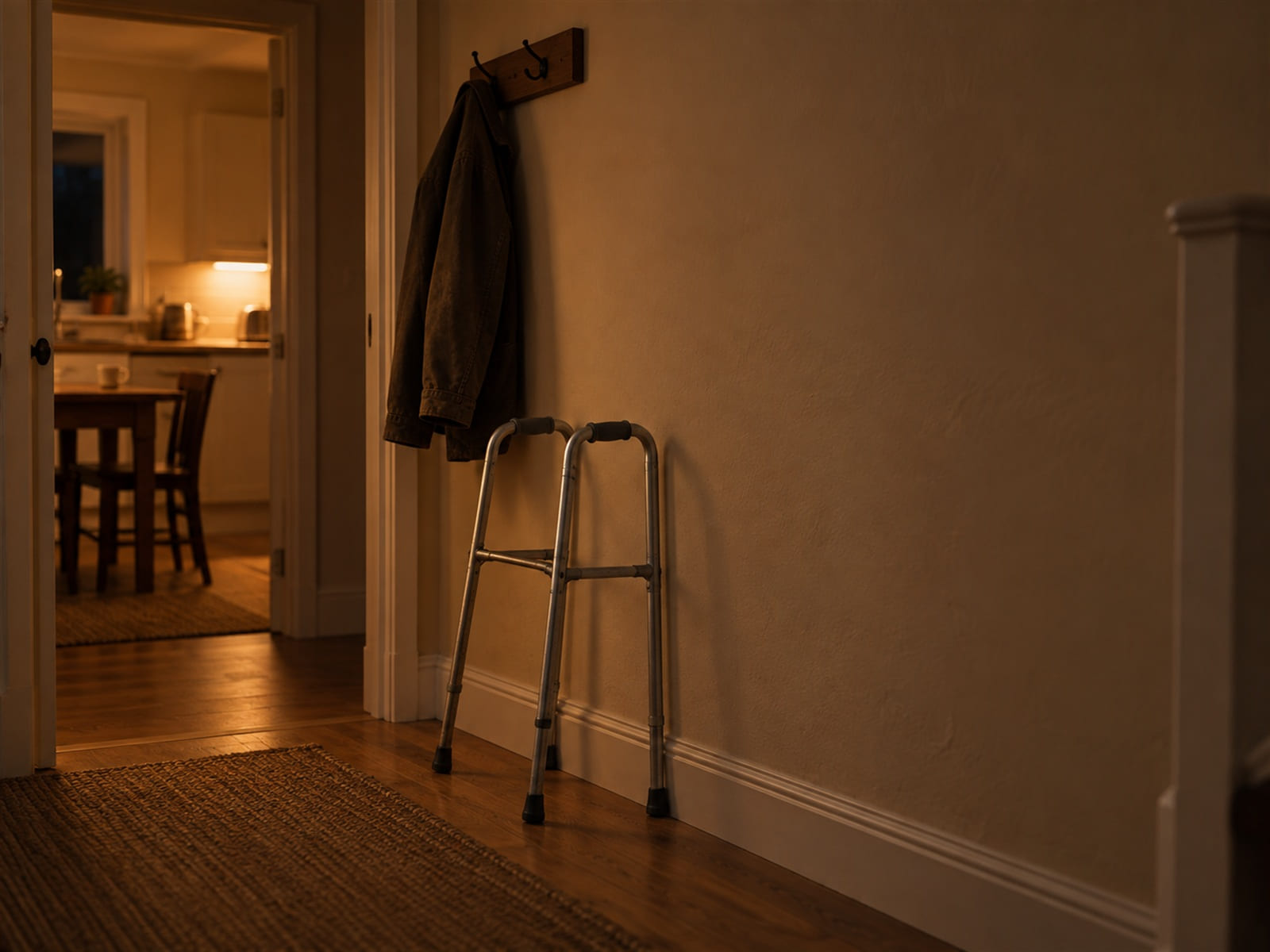
The day often does not end when the other person goes to bed.
Why this verse and not the others that came close
Three other passages were considered, and each was set aside for its own reason.
Numbers 11:14, where Moses says, "I am not able to bear all this people alone, because it is too heavy for me," is honest and close. It has the same shape as the passage this site gives for burnout, though, and using it here would repeat that page instead of saying something new to a carer.
Galatians 6:2, "Bear one another’s burdens", is written to a community about carrying each other. Given to the one person already carrying the heaviest load, it reads as another task. It is a better verse for the people around a carer than for the carer.
Matthew 11:28-30 is the passage this site gives for anxiety.
Isaiah 40:11 was chosen because it places the one doing the caring among the cared for, and does not praise their endurance or ask for more of it.
What the care organizations say you need
The US National Institute on Aging says plainly that "the care of a person with Alzheimer’s often exceeds what one person can provide on their own". That sentence is about the illness and what it demands. The same page recognizes that you may feel you should be able to do everything yourself, or that it is not acceptable to leave the person with somebody else.
Alzheimer's Society describes dementia care as "often unlike caring for someone with any other condition", and says carers may end up without the time or energy for ordinary life. The World Health Organization describes dementia as a general term for the effects of a variety of diseases and injuries that affect the brain, and as symptoms worsen, so does the need for daily support. The job grows because the illness does.
The Alzheimer's Association lists the signs of carer stress, including exhaustion, sleeplessness, trouble concentrating and a flat feeling of not caring anymore, and says that if they come regularly, make time to talk to your doctor, because ignoring them can cause your own physical and mental health to decline.
Where to go next
This verse also anchors the Caring for someone topic, where its setting and the other candidates are kept together.
If your situation is harder to put into a category, describe it to Bible Nudge in your own words and it will suggest one passage for it. Find a passage.
If the caring has worn you down to the point of not wanting to go on, please talk to somebody today. In the United States, call or text 988 for the Suicide and Crisis Lifeline. In the UK and Ireland, Samaritans takes calls on 116 123. For other countries, Find A Helpline has services listed by where you are.
Words that come up here
Tap a term to see what it means.
Ambiguous loss. Family Caregiver Alliance's term for losing somebody who is still physically present, as happens gradually with dementia.