

The fears people post on Reddit about burnout are specific. One person on r/Christianity, exhausted after months of reading the Bible every day, wanted to take a break but was "scared that God will be angry with me for stopping". Another wrote, "Im Not Doing enough for God". A church volunteer wrote, "I worked a whole second job for the church", and someone at the end of their rope wrote, "I'm tired of 'handling it well.'"
The Bible has no word for burnout, which is a modern term. It does have several people worn out by their work or their calling, and in each story somebody attends to the load. Moses is told his work is too heavy for one person. Elijah is woken to eat, twice, and allowed to sleep. Jesus takes his tired friends away to rest. And rest itself is written into the text from the first chapter.
If you only have a minute
Too heavy for one person
Exodus 18, where Moses' father-in-law tells him "the thing is too heavy for you."
Fed and allowed to sleep
1 Kings 19, where an angel wakes Elijah twice to eat.
Rest, commanded
The Sabbath in Genesis 2, Exodus 20 and Deuteronomy 5, extended to servants as well.
Is being this tired a sin?
None of the sources below calls it one; Desiring God puts it plainly: "It is not a sin to be tired."
If it is more than tiredness
The NHS suggests talking to a GP, and the crisis lines at the end name their countries.
Moses, and a load too heavy for one person
The passage this site offers for burnout comes from Exodus 18. Moses has been judging the people's disputes alone, "from the morning to the evening," with a crowd standing around him all day. His father-in-law Jethro watches and then says:
Moses’ father-in-law said to him, “The thing that you do is not good. You will surely wear away, both you, and this people that is with you; for the thing is too heavy for you. You are not able to perform it yourself alone.
Notice what is called "not good." It is the arrangement, not Moses. And it is somebody else who sees it first. Jethro's advice is practical: appoint able people to handle the smaller cases, "and they shall share the load with you" (Exodus 18:22). The page on work burnout reads Exodus 18:17-18 and the verses around it closely.
If you want something to do with it today, read Jethro's words as if a friend had said them about your week, and ask which part of the load could be shared.
Moses again: "I am not able to bear all this people alone"
In Numbers 11, Moses says it himself, to God: "I am not able to bear all this people alone, because it is too heavy for me." God's answer is not a rebuke. Seventy elders are gathered, "and they shall bear the burden of the people with you, that you don't bear it yourself alone" (Numbers 11:14-17).

The Bible's worn-out people are usually doing work that is too much for one person.
Elijah under the tree
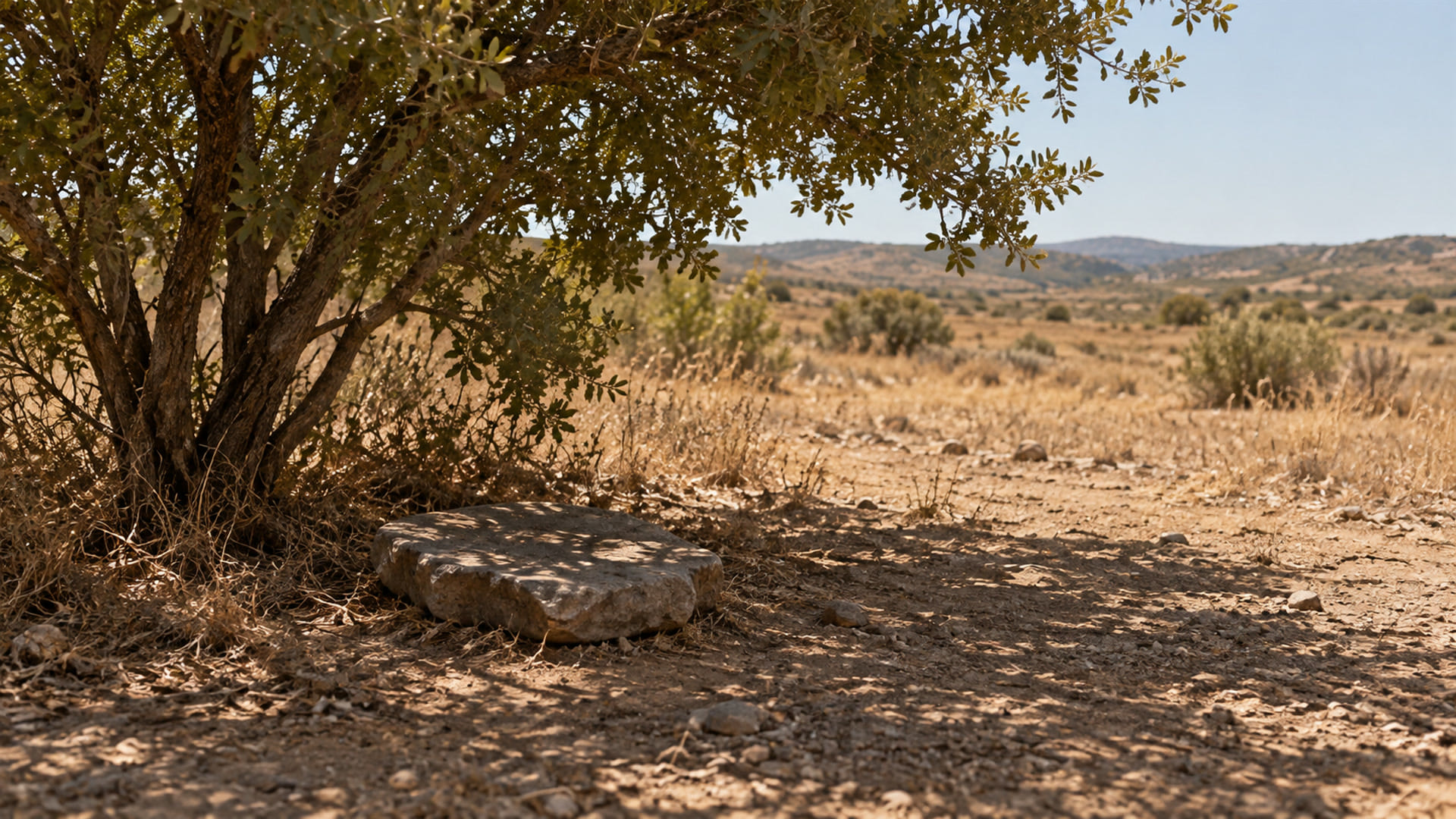
The story of Elijah in 1 Kings 19 comes straight after his greatest public moment. Threatened with death by the queen, he runs for his life, walks a day into the wilderness and sits under a juniper tree. He says, "It is enough," and asks God to take his life. Then he lies down and sleeps.
What happens next is simple. An angel touches him and says, "Arise and eat!" There is bread baked on coals and a jar of water. He eats, drinks and lies down again. The angel comes a second time, tells him again to eat, and gives the reason: the way ahead is too much for him. Only after that does he travel on.
The Bible teacher David Guzik notes the order: "God first ministered to Elijah's physical needs." The Lutheran scholar Terence Fretheim, writing at Working Preacher, traces the same sequence of sleep, touch, food and water. There is no lecture under the tree.
If you have had thoughts like Elijah's, of not wanting to go on, please do not carry them alone tonight. The crisis lines at the end of this page name their countries.
"Come away and rest awhile"
In Mark 6, the apostles come back from a stretch of work and tell Jesus everything they have done. He says, "You come apart into a deserted place, and rest awhile." The reason is given in the next line: "there were many coming and going, and they had no leisure so much as to eat" (Mark 6:31).
Rest is written into the text
On the seventh day, Genesis says, God "rested on the seventh day from all his work which he had done" (Genesis 2:2). The Sabbath command in Exodus 20 grounds rest in creation. When Deuteronomy 5 repeats it, the reason changes: remember that you were slaves in Egypt. And it adds a line about the people with the least power in the household, "that your male servant and your female servant may rest as well as you" (Deuteronomy 5:14). Rest is a command in the text, not a reward for finishing.
Psalm 127:2 says it plainly: "It is vain for you to rise up early, to stay up late, eating the bread of toil; for he gives sleep to his loved ones."
Christian traditions apply the Sabbath differently today. The Catholic Catechism teaches Sunday rest and speaks of "the proper relaxation of mind and body." The Orthodox Church in America says Christians are not bound to the Saturday Sabbath, while commending weekly time kept for worship and rest. The Westminster Confession, in the Reformed tradition, keeps one day in seven as "the Christian Sabbath."
Is burnout a sin?
Nancy Wilson, writing at Desiring God, says it directly: "It is not a sin to be tired." The Orthodox Church in America's article on church burnout goes further in a practical direction: what we call burnout "may in fact be clinical depression," and may need medical attention as well as spiritual counsel. The psychologist Thomas Plante, writing about Catholic church professionals, treats burnout as a workplace problem with its own pressures in religious settings. None of these sources calls burnout itself a sin.
The two verses people usually send
Galatians 6:9 says, "Let us not be weary in doing good, for we will reap in due season, if we don't give up." In its setting, Galatians 6:7-10 is about sowing and reaping and doing good to others, especially fellow believers.
Isaiah 40:31 says, "those who wait for Yahweh will renew their strength." It answers Israel's complaint, two verses earlier, that "my way is hidden from Yahweh." Both are real promises in their places. The work burnout page explains why neither was chosen as this site's first passage for someone already worn out.
What the word means, and who uses it
The World Health Organization defines burn-out as a syndrome from chronic workplace stress that has not been managed, marked by exhaustion, mental distance or cynicism about the job, and reduced effectiveness. It says burn-out "is not classified as a medical condition" and applies only to work.
Other sources use the word more widely. The US National Institute on Aging writes about caregiver burnout, and researchers studied parental burnout in 42 countries. If you are worn out by caring or by parenting rather than a job, those sources are describing you, even if the WHO definition does not.
If you serve in a church
A Hartford Institute survey of about 1,700 American clergy, reported by AP, found that more than half had seriously considered leaving ministry since 2020. Volunteers on Reddit write of weekends "fully consumed by ministry: rehearsals, Bible studies, band service, and other church activities". Moses, too, was doing sacred work when Jethro told him it was too heavy for one person.

Volunteers and clergy burn out too.
When to get help
The NHS lists signs of burnout including feeling tired and drained, losing motivation, withdrawing from others and changes to sleep or appetite, and says to talk to a GP if burnout is affecting your daily life or mental health. If what you feel is closer to depression, as the Orthodox Church in America article above allows it may be, that is worth saying to the doctor too.
Questions people ask
Does the Bible talk about burnout? Not by that name. It describes people worn out by their work, including Moses in Exodus 18 and Numbers 11 and Elijah in 1 Kings 19.
Is it okay to rest when there is so much to do? The Sabbath commands rest for everyone in the household, servants included, and Jesus took his apostles away to rest when they had no time to eat.
What is the spiritual meaning of burnout? The Bible does not give one. The stories it tells treat the worn-out person with food, sleep and shared work.
Where to go next
Start with Exodus 18:17-18 in its setting, or let Bible Nudge take a line about what you are carrying and come back with one passage and what surrounds it. Find a passage.
If exhaustion has turned into thoughts of ending your life, please reach a person tonight. In the United States, call or text 988 for the 988 Suicide and Crisis Lifeline. In Canada, call or text 9-8-8. In the UK and Republic of Ireland, Samaritans is on 116 123. In Australia, Lifeline is 13 11 14. Anywhere else, Befrienders Worldwide can point you to a center near you.
Words that come up here
Tap a term to see what it means.
Jethro. Moses' father-in-law, a priest of Midian, who tells Moses his work is too heavy to do alone.