


People ask this question in very different states. Some want comfort. Some have been told that the Bible says "do not be anxious" and are afraid their anxiety means they are failing God. One person on Reddit's r/Christianity put it as plainly as it can be put: "Is anxiety (specifically GAD) a sin?" Another wrote that "the Bible says to cast your anxiety's onto Him but I'm not sure how to interpret this". And another, with a diagnosis, medication and therapy, asked whether Philippians 4:6-7 meant they were "not trusting God enough".
The short answer is that the Bible speaks about worry many times and in very different settings. It tells disciples not to be anxious about food and clothing. It tells a church to bring every request to God. It invites people to throw their worries on God "because he cares for you." And it records people in deep distress, Jesus among them, without a word of rebuke for the distress.
If you only have a minute
A place to start tonight
Matthew 11:28-30, "Come to me, all you who labor and are heavily burdened, and I will give you rest."
The famous commands
Matthew 6:25-34 and Philippians 4:6-7, each spoken to a particular audience in a particular setting.
Distress without rebuke
Jesus in Gethsemane, Hannah at the temple, Elijah under the tree, Paul in Asia.
Is it a sin?
Christian traditions answer differently, and they are named below.
If it is more than worry
The NHS, NIMH and Mind describe when to see a doctor, and the crisis lines at the end name their countries.
Where to start reading tonight
If you want one passage rather than a survey, the one this site offers for anxiety is Matthew 11:28-30:
28 Come to me, all you who labor and are heavily burdened, and I will give you rest. 29 Take my yoke upon you, and learn from me, for I am gentle and humble in heart; and you will find rest for your souls. 30 For my yoke is easy, and my burden is light.
Its shape is an invitation. Jesus says it just after he has spoken hard words to towns that would not listen, and just after thanking the Father for showing things to "infants" rather than the wise. Nothing in it tells you to stop feeling what you feel before you come. The page on anxiety and overthinking reads it slowly, and you can read the passage with the verses around it.
One way to use it: read it once, then read only the first six words again, and stop there for as long as you need.
What the Bible says, passage by passage
Matthew 6:25-34. In the Sermon on the Mount, Jesus tells his disciples, "don't be anxious for your life: what you will eat, or what you will drink; nor yet for your body, what you will wear." He points them to birds and wildflowers, and ends, "Therefore don't be anxious for tomorrow, for tomorrow will be anxious for itself. Each day's own evil is sufficient." It is about daily needs, spoken to people who were often poor, and it is honest that each day has its own trouble.
Luke 12:22-34 repeats much of the same teaching in another setting, after a parable about a rich man who stored up grain. Luke 10:41 has Jesus say to a busy host, "Martha, Martha, you are anxious and troubled about many things."
Philippians 4:6-7. Paul writes to a church he loves: "In nothing be anxious, but in everything, by prayer and petition with thanksgiving, let your requests be made known to God. And the peace of God, which surpasses all understanding, will guard your hearts and your thoughts in Christ Jesus." The verse that tells people not to be anxious is also the one that tells them to bring everything to God.
1 Peter 5:6-7. "Humble yourselves therefore under the mighty hand of God, that he may exalt you in due time; casting all your worries on him, because he cares for you." It is written to Christian communities under pressure, in a passage about humility.
Psalm 94:19. "In the multitude of my thoughts within me, your comforts delight my soul." A psalmist who says, one verse earlier, that his foot was slipping.
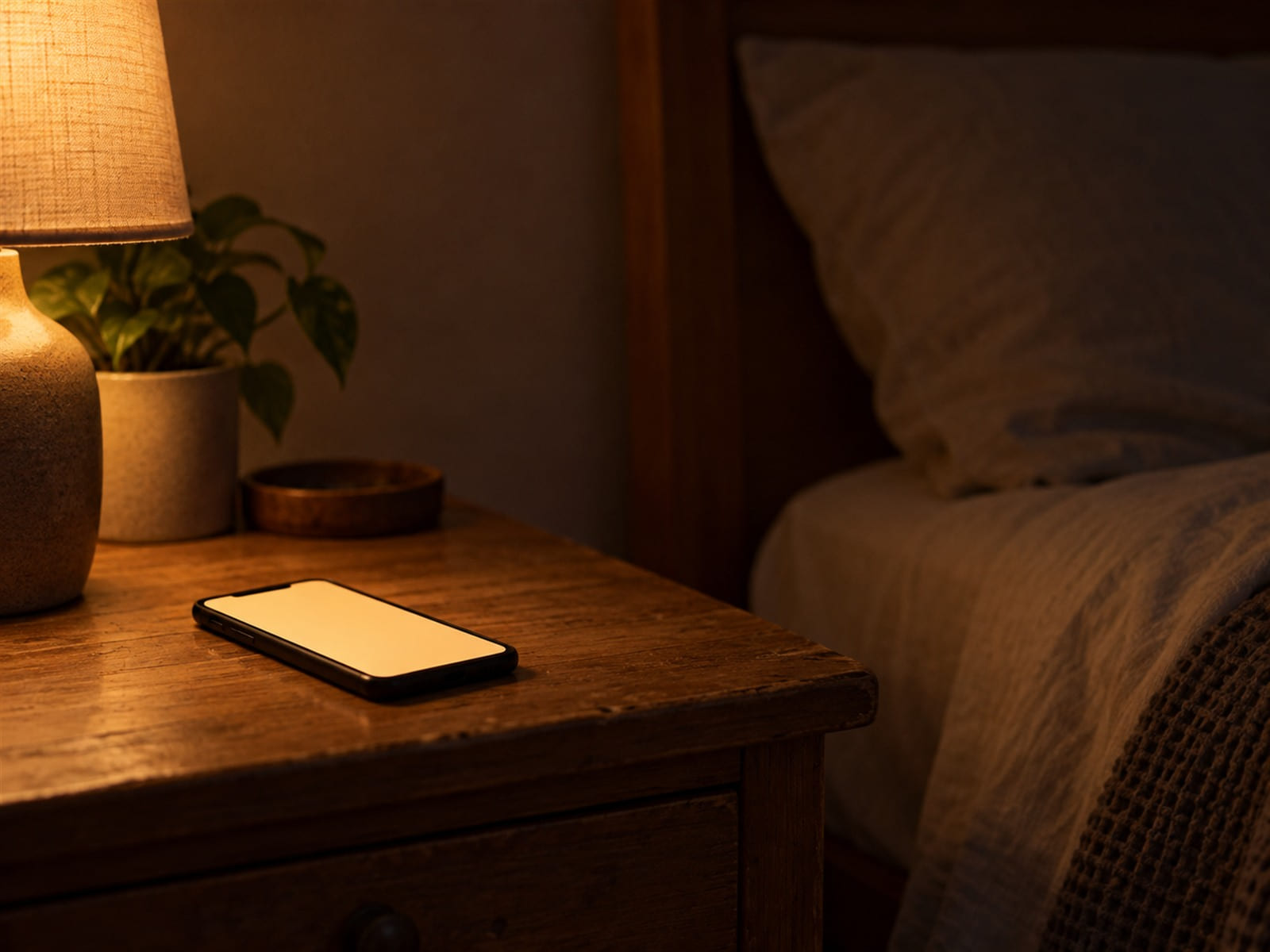
Many people ask this question late at night, on a phone.
The words behind "anxious"
The Greek verb translated "anxious" in Matthew 6, Luke 10 and 12 and Philippians 4 is merimnaō. Lexicons give its range as being anxious or distracted, and also as caring for or looking out for someone (Strong's and Thayer's, at Bible Hub). Paul uses the same verb approvingly when he says Timothy will "truly care" for the Philippians (Philippians 2:20), and when he says members of a church should care for one another (1 Corinthians 12:25). The Hebrew word in Psalm 94:19 is given by Brown-Driver-Briggs as "disquieting thoughts".
So, the ancient words name worry and care, sometimes as a fault and sometimes as love. An anxiety disorder, as doctors define it today, is a later and narrower category, and none of these verses was written as a diagnosis of it.
People in distress, and no rebuke
The Bible records several people in exactly this state, and it tells their stories without scolding them.
In Gethsemane, Jesus "began to be sorrowful and severely troubled," and told his friends, "My soul is exceedingly sorrowful, even to death. Stay here, and watch with me" (Matthew 26:37-38). Hannah, praying at the temple, told the priest Eli, "I am a woman of a sorrowful spirit," and he answered, "Go in peace" (1 Samuel 1:15-17). Elijah ran for his life, lay down under a tree and asked God to take his life; an angel woke him twice to eat and drink, and he slept (1 Kings 19:1-8). Paul wrote that "we were weighed down exceedingly, beyond our power, so much that we despaired even of life" (2 Corinthians 1:8).
None of these passages treats the distress itself as a failure. That does not settle every question, but it is worth knowing if you have been told that feeling this way is proof of something wrong with your faith.
Is anxiety a sin?
Christian traditions answer this differently. Several are set out here, each linked to its source.
At the stricter end, Ligonier's article What Is Anxiety? calls Matthew 6:25 and Philippians 4:6 biblical commands and says disobeying them is sin, while treating Paul's concern for his churches as godly. Stephen Cole, writing at Bible.org, says "We must put off anxiety which is sin," and adds that Paul is not encouraging a careless attitude. GotQuestions says anxiety is often a result of sin and also that "Not all anxiety is sinful."
Others read the same verse differently. Curtis Chang, writing for Bible Gateway, says he likes Philippians 4:6 but not how it is used as a "clobber verse" "to make anxious people feel like they're doing something wrong." The Catholic Catechism, in paragraph 2547, speaks of abandonment to the Father's providence freeing us "from anxiety about tomorrow." The Orthodox Church in America's bishops wrote, in a 2021 letter, "we must not be ashamed to admit that we feel fear."
The seventeenth-century commentator Matthew Henry, reading Philippians 4, drew a line many people find useful: we "must use lawful means for our own preservation and support, but not torment ourselves with anxious thoughts about the event."
If you have been told it shows a lack of faith
Some people are told this directly. One person on Reddit's r/Christianity described hearing "Your anxiety is caused by a lack of faith" and "Just pray and read the Bible and all of your worries will be gone," and called both useless advice. Another wrote that "Verses about not being anxious or bringing worries to God don't magically make anxiety disappear for me".
There is a small amount of research on this. Caleb Lack and colleagues studied 134 students at a religious university in 2023 and found that believing anxiety disorders have spiritual causes and cures predicted feeling stigma about seeking help. It is one sample at one kind of school, so it describes a risk rather than proving a rule.
For the reader who takes medication: none of the traditions quoted above teaches that treatment is a failure of faith, and Matthew Henry's "lawful means" was written long before modern medicine. The medical question itself belongs with a doctor.

Everyday worry and an anxiety disorder are different things.
When worry becomes something more
Everyday worry and an anxiety disorder are not the same. The US National Institute of Mental Health says feeling anxious is a normal part of life, but that in an anxiety disorder the anxiety does not go away and can get worse over time. Mind says anxiety becomes a mental health problem when it affects your ability to live as fully as you want to. The World Health Organization counts 470 million people with an anxiety disorder in 2023.
The NHS says to see a GP if you are struggling to cope with anxiety, fear or panic and the things you are trying are not helping. It describes a panic attack as sudden, intense fear with a racing heart, fast breathing or shaking, usually lasting 5 to 20 minutes.
Questions people ask
Does the Bible say "do not worry" 365 times? No reliable count supports that number, and any total depends on the translation and on which words are counted.
What does "cast your anxiety on him" mean? It is 1 Peter 5:7, which in the World English Bible reads "casting all your worries on him, because he cares for you." The reason given is God's care, not the reader's success at stopping the worry.
Is it wrong for a Christian to take medication for anxiety? None of the Catholic, Orthodox, Reformed or evangelical sources quoted here says so. Matthew Henry wrote of using "lawful means" for our own support.
Where to go next
Start with Matthew 11:28-30 in its setting, or let Bible Nudge take a line about what you are carrying and come back with one passage and what surrounds it. Find a passage.
If anxiety has turned into thoughts of ending your life, please reach a person tonight. In the United States, call or text 988 for the 988 Suicide and Crisis Lifeline. In Canada, call or text 9-8-8. In the UK and Republic of Ireland, Samaritans is on 116 123. In Australia, Lifeline is 13 11 14. Anywhere else, Befrienders Worldwide and Find A Helpline list services by country.
Words that come up here
Tap a term to see what it means.
Merimnaō. The Greek verb behind "anxious" in Matthew 6 and Philippians 4. It can mean worry, and it can also mean caring for someone.