

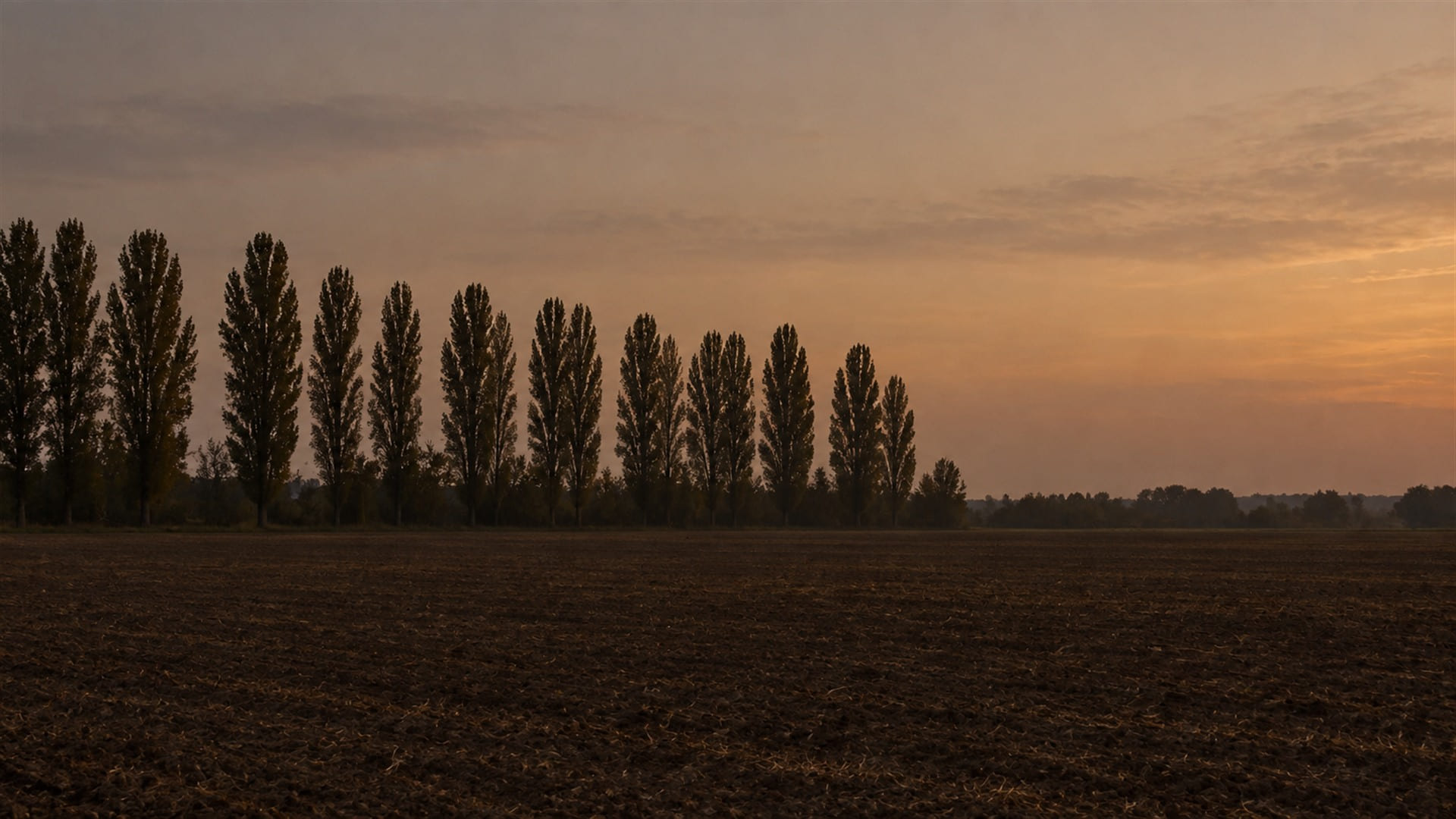
One person wrote on Reddit's r/Christians, "I struggle with bad anxiety in general", then, "all the unseasoned footage I’m seeing… I’m so scared."
If you have just turned off the news, or cannot, start with the psalm below. Wherever you are, later sections speak to someone watching from afar, military families, veterans, families in a war zone, parents and pastors.
If you only have a minute
Read tonight
Psalm 56:3-4, "When I am afraid, I will put my trust in you."
For a family apart
A prayer for those in the armed forces, prayed by name.
If fear takes over
Crisis lines, by country, near the end.
Psalm 56:3-4, words to say while still afraid
When I am afraid, I will put my trust in you. In God, I praise his word. In God, I put my trust. I will not be afraid. What can flesh do to me?
Verse 2 reads, "My enemies want to swallow me up all day long, for they are many who fight proudly against me." The heading places him in Gath, held by the Philistines. Fear and trust share one line, and you can say it while still afraid. Say verse 3 once before you put the phone down, then ask: what are you afraid of right now, if you say it plainly? Fear of the future reads it closely.

After the news.
If you are watching from far away
Mind, a UK charity, lists wars among upsetting news and quotes one person: "I started to feel overwhelmed. It was all getting too much. I was getting anxious about all sorts of uncertainties."
In 2 Chronicles 20, Jehoshaphat hears an army is coming. He "was alarmed, and set himself to seek to Yahweh," and all Judah stands before Yahweh "with their little ones, their wives, and their children." He prays, "For we have no might against this great company that comes against us. We don’t know what to do, but our eyes are on you." Matthew Henry, a Reformed commentator, reads it as a prayer leaning on God rather than on force. It gives words to people with no power over what is coming, children included. Psalm 46:9, "He makes wars cease to the end of the earth," is read in Bible verses for stress.
In 2 Kings 6, Elisha's servant wakes to an army around the city. Elisha tells him, "Don’t be afraid; for those who are with us are more than those who are with them," and the servant sees "the mountain was full of horses and chariots of fire." When the king asks of the captured soldiers, "Shall I strike them?", Elisha says, "You shall not strike them." They are fed and sent home, and "the bands of Syria stopped raiding the land of Israel." Henry reads it as a lesson "not to render evil for evil," and David Guzik at Enduring Word says the mercy showed "the God of Israel was not a God of merciless destruction." It speaks to anyone praying for every side.
The prophets and a day without war
Speaking to Judah and Jerusalem, Isaiah 2:4 sees a day when "they shall beat their swords into plowshares, and their spears into pruning hooks. Nation shall not lift up sword against nation, neither shall they learn war any more," and Micah 4:4 adds, "they will sit every man under his vine and under his fig tree; and no one will make them afraid." Rashi, the Jewish commentator, places it in the days of the Messiah; Matthew Henry reads it as fulfilled through the gospel and fully in the last days. The words are carved on the Isaiah Wall across from the United Nations in New York. Worn out by the arguing? Psalm 120:7 says it: "I am for peace, but when I speak, they are for war."
What Jesus said about war
Asked about the end of the age, Jesus says in Matthew 24:6, "You will hear of wars and rumors of wars. See that you aren’t troubled, for all this must happen, but the end is not yet." Matthew Henry reads it as a word against dismay at reports of calamity, and Cornelius a Lapide, a Catholic commentator, notes that "the end is not yet." Near Jerusalem he "saw the city and wept over it" (Luke 19:41); both commentators tie it to Rome's destruction of the city in AD 70. He said, "Blessed are the peacemakers, for they shall be called children of God" (Matthew 5:9), and on his last night, "In the world you have oppression; but cheer up! I have overcome the world" (John 16:33).
If you are afraid it means the end of the world
One person wrote on Reddit's r/Christianity, "Recently ive been really scared about the end times." The r/Christians poster shared on Reddit what their late father used to say: "Welp, if you were really a Christian you wouldn’t be scared of the rapture."
Dallas Theological Seminary, in the dispensational tradition, expects Christ's return before a literal thousand-year reign. N. T. Wright, an Anglican scholar, reads Jesus's words about wars mainly in the first-century crisis around Jerusalem, and R. C. Sproul, Reformed, relates much of Matthew 24 to Jerusalem's destruction. Whichever you hold, Jesus told frightened friends, "See that you aren’t troubled."
For a military family
Blue Star Families' 2023 survey, a voluntary survey of more than 7,400 US service members, veterans and families, found family separation among active-duty families' top concerns. The Episcopal Book of Common Prayer keeps a prayer "For those in the Armed Forces of our Country" to pray by name: "Almighty God, we commend to your gracious care and keeping all the men and women of our armed forces at home and abroad."
The Library of Congress's Veterans History Project calls Psalm 91 "the Soldier’s Psalm." It opens, "He who dwells in the secret place of the Most High will rest in the shadow of the Almighty," and verse 7 says, "A thousand may fall at your side, and ten thousand at your right hand; but it will not come near you." Matthew Henry reads it as confidence in God while believers still meet ordinary trouble, and John Calvin warns against "groundless security," since faithful people suffer and die. Both leave room for the family whose soldier came home, and the one whose soldier did not. Bible verses for nightmares reads verses 1-6 for the night.
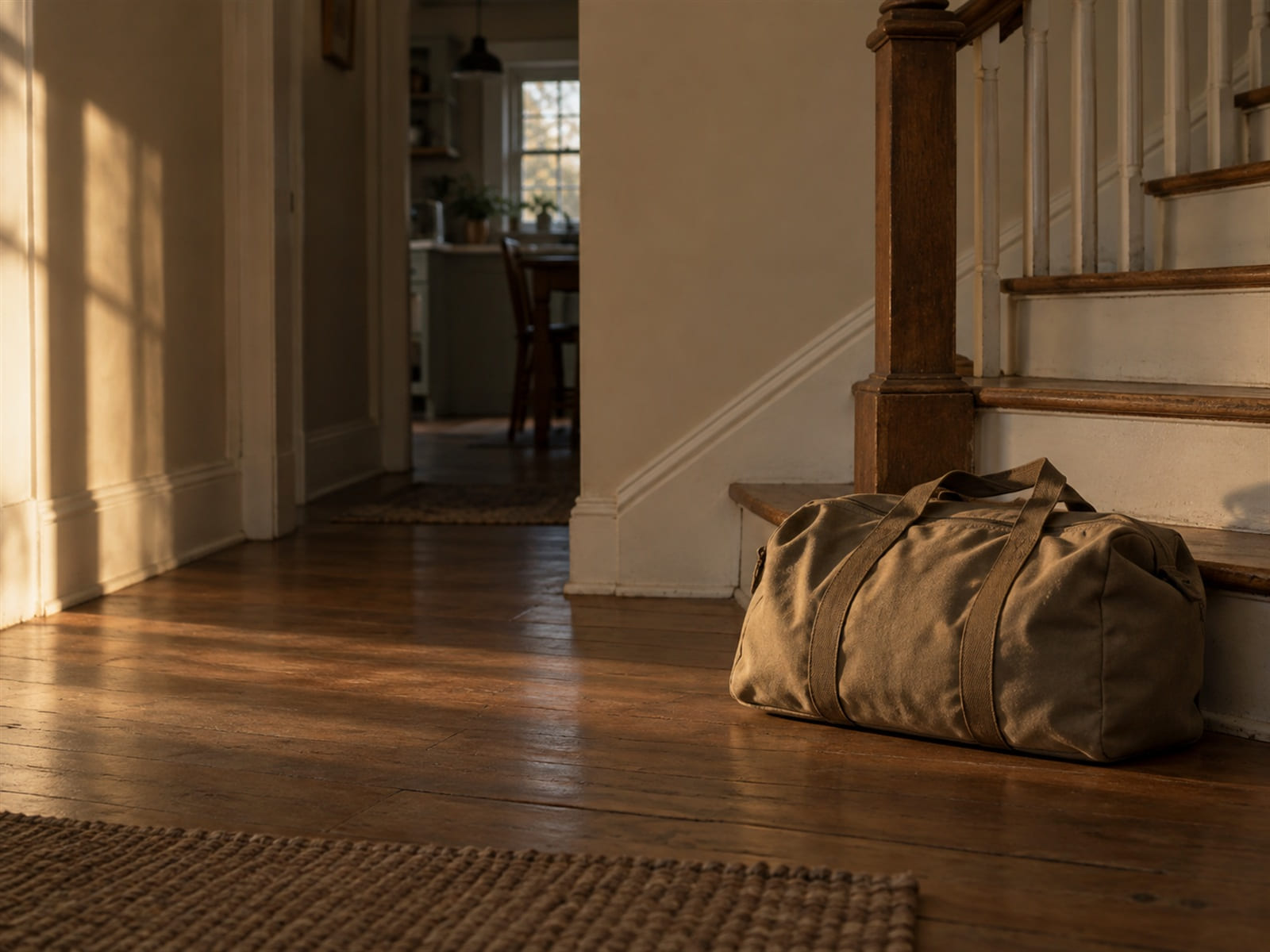
Waiting by the door.
For a veteran
Brett Litz and colleagues (Clinical Psychology Review, 2009) described moral injury as following "an act of perpetration, omission, or commission that violates deeply held moral beliefs or expectations." The VA National Center for PTSD includes "bearing witness to" such acts and gives Jonathan Shay's account from Achilles in Vietnam (1994): a betrayal of what is right, by someone in legitimate authority, when the stakes are high. Forgiving yourself covers guilt after service.
In the United States, the Veterans Crisis Line is 988, then press 1. In Canada, Veterans Affairs Canada Assistance Service is 1-800-268-7708. In England, Op COURAGE is 0300 323 0137, and across the UK, Combat Stress is 0800 138 1619. In Australia, Open Arms is 1800 011 046.
If your family is in a war zone, or you fled one
The World Health Organization links exposure to "conflict, abuse, violence and extended detention" with "mental health conditions such as depression and PTSD." The ICRC's Restoring Family Links helps people find relatives separated by conflict, through national Red Cross and Red Crescent societies. Psalm 120:5, "Woe is me, that I live in Meshech," is a psalmist far from home.
If your child asked
UNICEF says, "Children have a right to know what’s going on in the world, but adults also have a responsibility to keep them safe from distress," and Save the Children says children may see "frightening images and videos" and "it is natural for children to feel worried." One idea: read Micah 4:4 together, everyone under their own vine and fig tree, where "no one will make them afraid."
For a pastor asked to pray for peace
The Book of Common Prayer's "For Peace" begins, "Eternal God, in whose perfect kingdom no sword is drawn but the sword of righteousness, no strength known but the strength of love." The Roman Missal's Mass in Time of War or Civil Disturbance asks that "the members of the human race, to whom you have given a single origin, may form in peace a single family." The Orthodox Great Litany prays, "For the peace of the whole world… let us pray to the Lord." The Jewish Oseh Shalom says, "May He who makes peace in His high places, make peace for us and for all Israel; and say, Amen."
What traditions teach about war
Thomas Aquinas names three conditions for a just war: "the authority of the sovereign," "a just cause," and "a rightful intention." The Catholic Catechism urges everyone "to prayer and to action so that the divine Goodness may free us from the ancient bondage of war" (2307) and sets strict conditions for legitimate defense (2309). The Orthodox Church in America says, "War is always a tragedy." The Lutheran Church Missouri Synod treats just-war criteria as a restraint on governments; Mennonite Church USA says "peace is God’s intention for humanity," calling the church to nonresistance and peacemaking. Take the differences to your own church.
If you typed "spiritual warfare"
Ephesians 6:12 says, "For our wrestling is not against flesh and blood, but against the principalities," then names the armor of God, ending "with all prayer and requests." John Chrysostom and John Calvin both read Paul as describing a struggle with spiritual powers. It is a passage about prayer and standing firm.
When fear of the news needs more than reading
Mind says anxiety that is "strong or lasts for a very long time" can become "overwhelming." If fear stops your sleep or daily life for weeks, see a family doctor, a GP in the UK.
Where to go next
If thoughts of ending your life come with this fear, reach a person tonight. In the United States, call or text 988. In Canada, call or text 9-8-8. In the UK and Ireland, Samaritans is on 116 123. In Australia, Lifeline is 13 11 14. Elsewhere, Find A Helpline lists lines by country.
Tonight, read Psalm 56:3-4 with the verses around it and say verse 3 once. For anything else, Bible Nudge offers one passage and what surrounds it. Find a passage.
Words that come up here
Tap a term to see what it means.
Moral injury. Distress after doing, failing to prevent or witnessing acts that break deeply held moral beliefs.