


You stopped, or you ran toward it, and you did what you could. Now it may come back the moment the house goes quiet. On Sunday, September 27, 2026, a small single-engine plane came down in a field south of East Troy Municipal Airport in Wisconsin; a joint police and fire release, as reported by FOX6 Milwaukee, WTMJ and the Milwaukee Journal Sentinel, gave four people aboard and all four surviving. On September 29, 2026, WALB reported that three experienced skydivers from a nearby skydiving business jumped near the site and helped until emergency crews arrived, and the business's own statement says some had emergency medical training. Local reports name the Federal Aviation Administration and the Town of East Troy Police Department as investigating, while WALB names the National Transportation Safety Board, so on September 29 the investigation was still being described differently.
You may have stopped at something very different, a car on a road. The same help applies to you.
If you only have a minute
Tonight
Tell one person what keeps coming back.
Words for the nights after
Psalm 56:3, said once, quietly.
This week
Keep your routine.
If the weeks go on
See a doctor or counselor.
What to do tonight and this week
In the United States, the SAMHSA Disaster Distress Helpline is 1-800-985-5990, by call or text. SAMHSA's April 4, 2025 announcement says it is for people who need crisis counseling after a traumatic event or disaster, including "survivors, first responders, eyewitnesses, and even those who watch related media reports on television."
The National Center for PTSD lists common reactions after a disaster, among them "Numbness," "Confusion," "Anxiety," "Flashbacks and nightmares," and "Sadness". Its guidance says "People may find it hard to stop thinking about the situation, have trouble sleeping, or feel keyed up or on edge," and "For most people those reactions will lessen over the first few weeks after the event." The American Psychological Association says "Psychologists recommend people lean on loved ones, prioritize self-care, and be patient with themselves," and to see a mental-health professional when distress persists or gets in the way of daily life. In practice:
- Tell one person you trust.
- Keep the day's routine.
- If the weeks go on and it is still wearing you down, book a visit with a doctor or counselor.
Psalm 56:3-4, words for the nights after
Bible Nudge's passage for fear is Psalm 56:3-4.
When I am afraid, I will put my trust in you. In God, I praise his word. In God, I put my trust. I will not be afraid. What can flesh do to me?
In the King James Version:
What time I am afraid, I will trust in thee. In God I will praise his word, in God I have put my trust; I will not fear what flesh can do unto me.
Psalm 56 is David's prayer while in danger from enemies, a psalm that moves between fear and trust. Verses 1 and 2 say his enemies "want to swallow me up all day long." The opening words, "When I am afraid," make room for fear that arrives after the danger is over, at two in the morning in a warm bed, and the rest of the line is something to do while still afraid. Matthew Henry, Protestant, writes that David "did not hesitate to admit that there were times when he was afraid," and Coptic Orthodox Bible Study says the psalm "teaches what to do with fear," describing fear "carried into trust."
Say verse 3 once, quietly, when the replay starts. Later, hold one question: what are you afraid of right now, if you say it plainly? Read Psalm 56:3-4 with the verses around it.
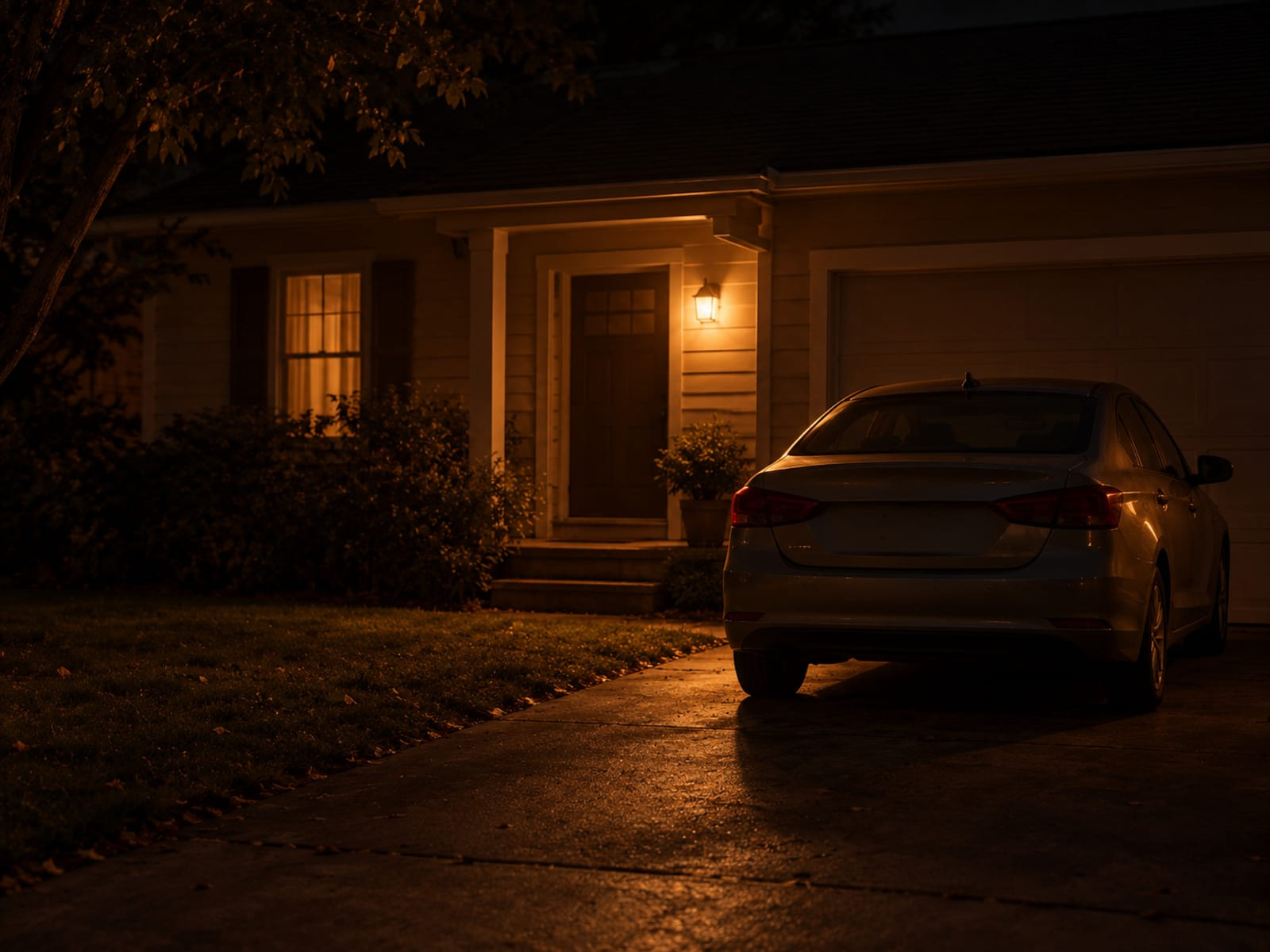
Ordinary things can carry it too.
Why it keeps replaying
The National Center for PTSD says reactions are "changeable and usually depend on the individual's history, perceptions, and exposure,". It also says "There may be a delay in emotional reactions, which may only appear after a certain level of stability has been achieved," for the person who felt fine at the scene and is undone a week later.
These phrasings were posted on Reddit by people who survived car crashes, not by people who stopped to help. In r/ptsd, one person wrote "I can't stop thinking about it, I can't go to sleep." (November 26, 2022). Another wrote "I can't stop blaming myself." (July 13, 2023). In r/CarAccidentSurvivors, a post from August 31, 2025 says "I can’t stop replaying it in my head."
What helps in the first weeks
The National Child Traumatic Stress Network's Psychological First Aid guide names safety, social connection, accurate information and linkage with services, and says "For some, talking about things that happened because of the disaster can help." The APA calls isolating and using substances to escape "not healthy ways to cope over time," a reason to keep one small outing and one conversation on the calendar.
An APA sleep handout suggests trying not to do anything in bed that might provoke anxiety, such as watching the evening news. If the coverage keeps bringing it back, read or watch it in daylight, in the kitchen, and leave the phone outside the bedroom.
If you are the husband, wife, friend or pastor
Invite them to tell it in their own words, and listen. Offer a day and a time rather than "let me know if you need anything," and keep the evening ordinary.
People have posted on Reddit, in r/ptsd, about lines that landed badly after their accidents: "I’ve been told I was just being a baby about it and that I needed to get over it." (August 28, 2025) and "A lot of people are telling me I should be over it by now but I find myself having mental breakdowns some nights." (April 20, 2024). Wording to borrow: "I'm glad you were there. What part keeps coming back at night?" Or: "You don't have to tell it in order. I'll sit with you either way." Or: "Want company this weekend, or would you rather I just text?" For reassurance: "Whatever you were able to do, it mattered that somebody was there."
For the one who helped, and the one who froze
Some people did something and keep going over it. Some feel they did too little, or wonder why it was them. The Bible records people who stopped, and people who sat beside someone in silence.
In Luke 10:33-35, a traveler "was moved with compassion," bound up a man's wounds, took care of him, and arranged care for the days after. In Acts 28:1-2, the people of Malta showed shipwrecked strangers "uncommon kindness," kindling a fire and receiving them because of the rain and the cold. In Job 2:11-13, Job's friends came to sympathize, wept, and sat down with him for seven days and seven nights, and "no one spoke a word to him, for they saw that his grief was very great." People who stopped, who lit a fire and who stayed quiet are all recorded, which is company for anyone who has just been one of them.
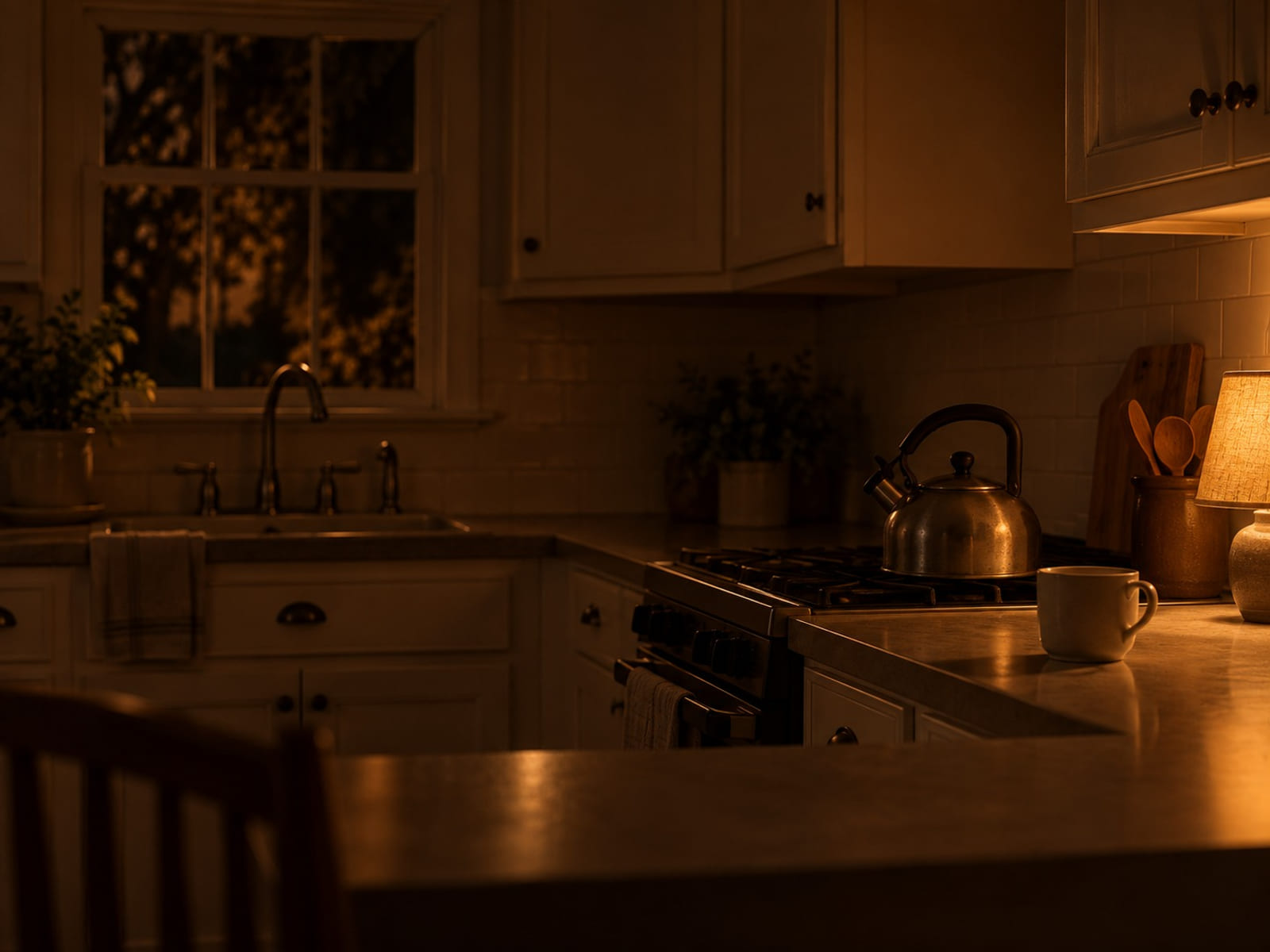
The quiet hour after the news is off.
One of the skydivers told WALB, "I'm just glad that we were able to do what we were able to do and get in and help." That is one person's account of the feeling afterward. For professionals, see Bible verses for first responders; for sudden news of a death, Bible verses for sudden death; and for the same psalm read by a waiting parent, when your child's school goes into lockdown.
A prayer you can borrow
The Church of England published a prayer after the Bondi terror attack. It is an Anglican prayer written for a different event, offered here for its words:
God our refuge and strength, close at hand in our distress; meet us in our sorrow and lift our eyes to the peace and light of your constant care.
Pray it once at the same hour each night for a week, with no name in it, or with the name of someone hurt in the crash if you know it.
Where to go next
If the nights have turned into thoughts of ending your life, please reach a person tonight. In the United States, call or text 988 for the 988 Suicide and Crisis Lifeline, or text HOME to 741741 for Crisis Text Line; the SAMHSA line above is also a United States route. In Canada, call or text 9-8-8. In the United Kingdom and Ireland, Samaritans is on 116 123; in England, NHS 111 is for urgent help and 999 is for an emergency. In Australia, Lifeline is 13 11 14, or text 0477 13 11 14. Anywhere else, Find A Helpline lists lines by country.
Tonight, tell one person the part that keeps coming back, say Psalm 56:3 once, and leave the news and the phone outside the bedroom.
Bible Nudge can take a line about what you are carrying and come back with one passage. Find a passage.
Words that come up here
Tap a term to see what it means.
Anglican. Belonging to the Church of England and the churches related to it.