

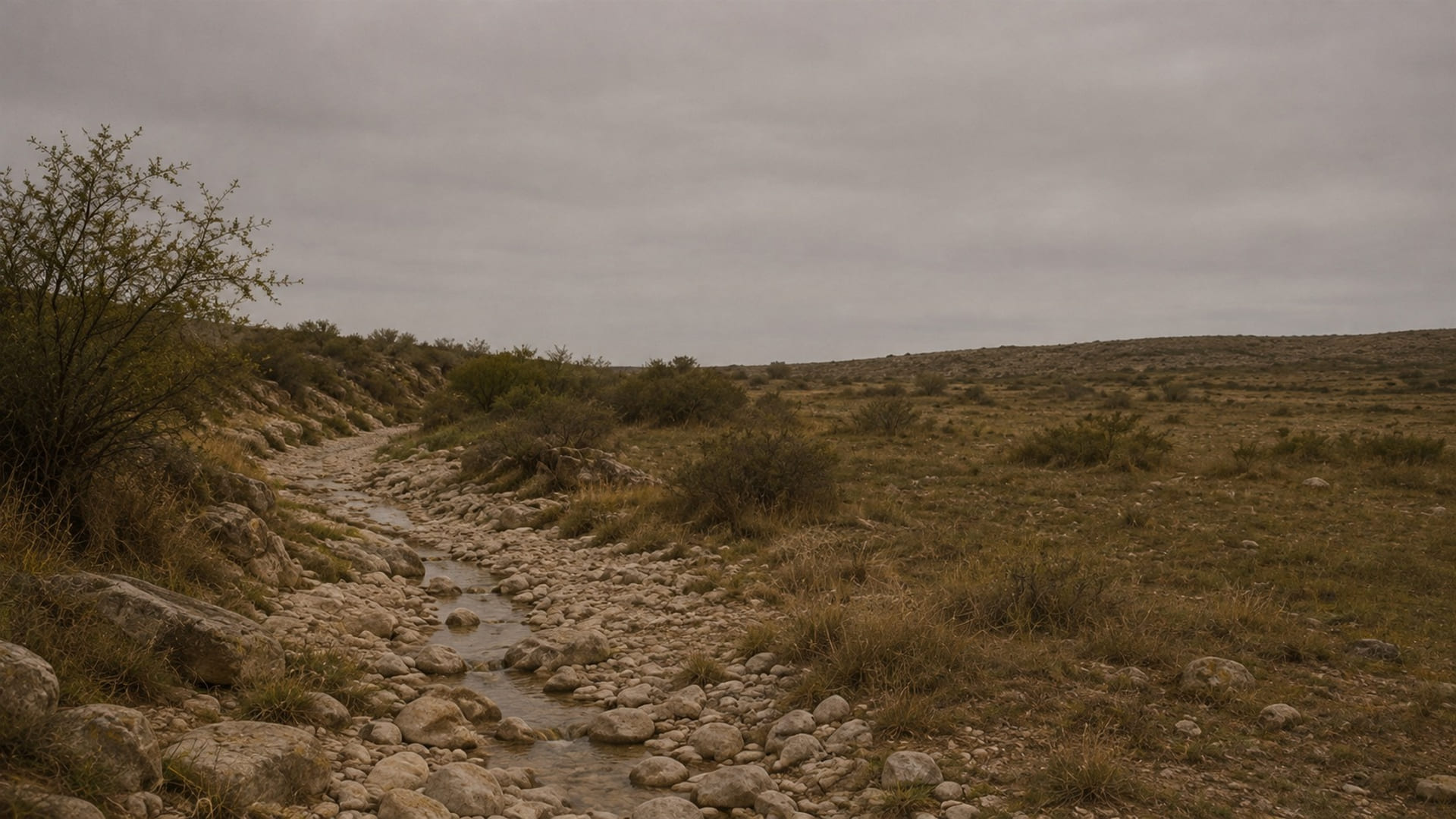
Spiritual dryness is what many Christians call a stretch when prayer, the Bible and church go flat, and you keep showing up and feel nothing back. It is common enough that every major tradition has a word for it, and people who kept their faith for a lifetime have written about living through it.
The Catholic Catechism, in paragraph 2731, describes dryness as a time when "the heart is separated from God, with no taste for thoughts, memories, and feelings, even spiritual ones," and calls it "the moment of sheer faith clinging faithfully to Jesus in his agony and in his tomb." Church of the Incarnation in Richmond, answering the question on 10 September 2025, says dryness may be "normal for Christians".
People put it in their own words too. On Reddit, in r/Catholicism on 12 October 2026, one person wrote "I’m a longtime Catholic, but my prayer life has become so dry." On Reddit again, in r/Christianity on 20 September 2026, another wrote "I keep showing up but I don’t feel anything back."
If you only have a minute
What it is
A season when prayer, Scripture and church feel flat, and the closeness you had has gone quiet.
What the traditions call it
Dryness, aridity, acedia, spiritual desertion, the wilderness state, hester panim.
A psalm from a dry place
Psalm 63, spoken by someone in a dry and weary land who still prays.
See a doctor as well as a pastor
If everything has gone flat for two weeks or more, not only prayer.
One thing to try this week
Keep your usual prayer time, make it shorter, and say Psalm 63:1 aloud once in it.
Why do I feel spiritually dry, and what causes it?
Writers and churches name different reasons, and they do not add up to one list. Several of them sit side by side below, each in its own words.
Hover or tap a row to highlight it. Sort by a column heading; a third click puts the rows back in their original order.
| GotQuestions (no date shown) | Physical, mental and emotional pain; sin or disobedience; misplaced priorities; relying on feelings rather than seeking God |
| The Gospel Coalition India, 23 August 2023 | Worries, wealth, spiritual neglect, choosing a "successful" life over spiritual priorities |
| Revive Our Hearts, Nancy DeMoss Wolgemuth, 24 January 2026 | A devotional rut, too much focus on mechanics, a diminished awareness of Christ, possible heart issues; dry spells as learning to walk by faith rather than sight |
| The Eucharistic Congress, 12 March 2026 | Anger, loneliness, fear, shame, remorse, and in some cases sin or discouragement |
| Church of the Incarnation, 10 September 2025 | Ordinary tiredness, poor eating, busyness, changing desires |
These writers give no common number or cause. One of them lists sin among the possible causes, while others describe dryness inside sincere faith, and both views stand beside each other here.
If the flatness began after a death or a long stretch of overwork, your question may be about grief or burnout as much as faith. Bible verses for grief and healing and what the Bible says about burnout are written for those.
What are the signs of spiritual dryness?
The signs below come from named writers, each in their own list. They describe what the season is like, so you can recognize it, and they are not a checklist or a score.
The Gospel Coalition India lists boredom when reading the Bible, disinterest in prayer, weariness with church attendance, purposelessness, lack of joy and a gradual withdrawal because God seems distant. A Gospel Coalition review of 8 May 2026, "Your Spiritual Dryness Might Be a Gift," presents Kyle Strobel and John Coe listing faded zeal, dull Scripture reading, routine worship and a sense that God is distant.
Church of the Incarnation describes "just going through the motions" and a loss of hunger for Scripture. The Eucharistic Congress describes prayer that feels like work, or like inertia.
Three people describe it on Reddit. In r/Christians on 13 May 2026, one wrote "I don’t feel anything when I’m praying, I’m worried that, deep down, I don’t actually believe it." In r/Christian on 31 August 2026, another wrote "When I pray, I feel more like I’m just talking into the void." And in r/Catholicism on 25 June 2026, a third wrote "I’ll pray consistently but it feels empty."
Some seasons ask for patience more than effort.
If you are afraid you are faking it, Church of the Incarnation makes a point worth keeping: being unhappy about the dryness can itself be a sign of continuing desire for God. Wanting the closeness back is part of the story, and it counts.
What does it mean when a spirit is dry, and what do the traditions call it?
Each tradition has its own word, and the words do not all mean the same thing. Side by side, ranked by none:
Hover or tap a row to highlight it. Sort by a column heading; a third click puts the rows back in their original order.
| Catholic, the Catechism | Dryness, in paragraphs 2729 to 2733, set apart from distraction, lack of faith and acedia; where it comes from shallow roots, "the battle requires conversion" |
| Carmelite, Teresa of Avila | Prayer as four ways of watering a garden, from hauling water by hand to rain that comes on its own; perseverance and virtue valued above felt consolation |
| Monastic, Evagrius Ponticus | Acedia, "the noonday demon," with restlessness and the urge to flee the cell |
| Monastic, John Cassian | The urge to leave, seek distraction or visit another brother |
| Scholastic, Thomas Aquinas | Acedia as sorrow about spiritual good, set against the joy of charity |
| Orthodox, Kallistos Ware | Hesychia, stillness and watchfulness; prayer not measured by how strongly it is felt |
| Reformed | Spiritual desertion, a felt withdrawal of God's presence while faith remains |
| Methodist, John Wesley | "The Wilderness State" and "Heaviness through Manifold Temptations": losing the felt sense of God's love while still believing |
| Quaker | Waiting and silence in worship when nothing inward is felt, in wording that differs by yearly meeting |
| Jewish | Hester panim, the hiding of the face |
The Catechism gives both halves in the same paragraph: dryness can be "the moment of sheer faith clinging faithfully to Jesus," and where it comes from shallow roots, "the battle requires conversion." Teresa of Avila's garden is in The Life, chapters 11 to 13, and in The Interior Castle, Fourth Mansions, she describes a movement from active prayer toward quiet.
Some of these words overlap and some do not. John of the Cross's dark night is a technical term for one kind of purification, and Bible verses for feeling far from God reads it with Ignatius and Westminster 18.4. The monastic word acedia appears among Evagrius's eight thoughts in signs of spiritual attack.
What is spiritual sloth? It is the old word acedia, and the everyday word for listlessness that carries a moral sense, and neither is the same as exhaustion, which sits closer to burnout. Kathleen Norris, in Acedia and Me (2008), uses the word for restlessness and an inability to stay present. The early writers treat acedia as a spiritual and moral category, while clinicians use different words, and whether it is a sin, a temptation or a state is left with the traditions.
What does the Bible say about spiritual dryness, and who in the Bible went through it?
The Bible keeps prayers spoken from dry places. The best known is Psalm 63, whose heading places David in the wilderness of Judah.
1 God, you are my God. I will earnestly seek you. My soul thirsts for you. My flesh longs for you, in a dry and weary land, where there is no water. 2 So I have seen you in the sanctuary, watching your power and your glory. 3 Because your loving kindness is better than life, my lips shall praise you. 4 So I will bless you while I live. I will lift up my hands in your name. 5 My soul shall be satisfied as with the richest food. My mouth shall praise you with joyful lips, 6 when I remember you on my bed, and think about you in the night watches. 7 For you have been my help. I will rejoice in the shadow of your wings. 8 My soul stays close to you. Your right hand holds me up.
The Hebrew behind the first verse is yavesh, dry, and ayeph, weary or faint, for the land; tsame, to thirst; and kamah, to long for. Jewish and Christian readers differ on whether the thirst is lament, longing or both, and Sefaria has the psalm.
It is also a psalm people pray every week. Psalm 63 is prayed on Sunday mornings in the Catholic Liturgy of the Hours, among the Six Psalms at Orthodox Matins, where it is numbered Psalm 62, and in Anglican morning cycles. A dry person's prayer is said by people who may feel nothing that morning, and you can borrow it the same way. The site's passage for nights is Psalm 63:6-7, read on psalms for sleep, and psalms for anxiety reads the whole psalm.

A walk can be a prayer too.
Other texts speak from dry and dark places, and each is worth reading in its setting:
- Psalm 84:5-7 describes pilgrims passing through the valley of Baca, often taken as a place of weeping or dryness, on their way to Zion.
- Psalm 77:1-12 has a troubled speaker who remembers what God did long ago while asking whether God has forgotten mercy.
- Jeremiah 15:15-21 has the prophet, under persecution, complaining that God has been like a brook that fails, and a reply follows in the prophetic setting.
- Lamentations 3:1-24 moves from affliction to the confession that God's mercies are not used up, a movement inside one speaker.
- Song of Solomon 5:2-8 gives a lover who searches and cannot find, read literally, allegorically and spiritually in different traditions.
Isaiah 50:10 is spoken to a person walking in the dark:
Who among you fears Yahweh, and obeys the voice of his servant? He who walks in darkness, and has no light, let him trust in Yahweh’s name, and rely on his God.
Elijah under the broom tree in 1 Kings 19:4-8 is read on what the Bible says about burnout. What these give is people the Bible keeps who prayed from a dry place and whose prayers are still said, and words to borrow when your own will not come. If you are looking for which psalm to read when discouraged, or which psalm speaks of renewal, Psalm 63 and Psalm 84:5-7 are good places to begin.
Which verses get sent to dry people as a rebuke, and what do they say in their setting?
Some verses get sent to dry people as a rebuke. Each reads differently in its setting. Revelation 2:1-7 is addressed by the risen Christ to the congregation in Ephesus, a church praised in the same lines for its work and endurance, and charged with having left the love it had at first.
1 “To the angel of the assembly in Ephesus write: “He who holds the seven stars in his right hand, he who walks among the seven golden lamp stands says these things: 2 “I know your works, and your toil and perseverance, and that you can’t tolerate evil men, and have tested those who call themselves apostles, and they are not, and found them false. 3 You have perseverance and have endured for my name’s sake, and have not grown weary. 4 But I have this against you, that you left your first love. 5 Remember therefore from where you have fallen, and repent and do the first works; or else I am coming to you swiftly, and will move your lamp stand out of its place, unless you repent. 6 But this you have, that you hate the works of the Nicolaitans, which I also hate. 7 He who has an ear, let him hear what the Spirit says to the assemblies. To him who overcomes I will give to eat from the tree of life, which is in the Paradise of my God.
Some writers apply Revelation 2:4 to any dry believer. Read in its chapter, it is spoken to one church. Both readings are on the table, and the setting is here so you can decide for yourself.
Matthew 24:12 is the verse people reach for when they speak of a believer cooling. It sits inside Jesus' talk about the end of the age:
Because iniquity will be multiplied, the love of many will grow cold.
Amos 8:11-12 describes a famine of hearing the words of Yahweh, in a prophetic oracle of judgment on Israel:
11 Behold, the days come,” says the Lord Yahweh, “that I will send a famine in the land, not a famine of bread, nor a thirst for water, but of hearing Yahweh’s words. 12 They will wander from sea to sea, and from the north even to the east; they will run back and forth to seek Yahweh’s word, and will not find it.
Is it spiritual dryness, depression, burnout or grief?
Everything gone flat, and not only prayer, is worth taking to a doctor as well as a pastor. Spiritual dryness, depression, burnout and grief can look alike from the inside, and health bodies and pastors both have something to say. Neither gives a diagnosis from a page.
The National Institute of Mental Health describes major depression as a low mood or loss of interest "most of the time for at least 2 weeks" that gets in the way of daily life. It lists "loss of interest or pleasure," tiredness, trouble concentrating, changes in sleep and appetite, withdrawal and thoughts of death, and says to talk to a health care provider. The UK charity Mind covers depression across mood, thoughts, body and behavior, and Bible verses for feeling far from God gives the NHS two-week line.
The World Health Organization, in ICD-11, calls burnout "a syndrome conceptualized as resulting from chronic workplace stress that has not been successfully managed," with "feelings of energy depletion or exhaustion," "increased mental distance from one’s job," and "reduced professional efficacy." It says the term "should not be applied to describe experiences in other areas of life."
Theological and clinical words name different things. The Gospel Coalition review calls dryness a possible gift, while NIMH lists lasting emptiness and loss of interest among signs of depression, and both can be true of one person in one season. Is depression a sin reads the Catechism on acedia and depression, and is it a sin to take antidepressants is for the medicine question.
As the site's own idea: when everything has gone flat, and not only prayer, see a doctor and a pastor or spiritual director in the same month.
Worn out is a real state, with real words.
If you are worn out, the site's passage for emotional exhaustion is Psalm 143:3-4, in the World English Bible:
For the enemy pursues my soul. He has struck my life down to the ground. He has made me live in dark places, as those who have been long dead. Therefore my spirit is overwhelmed within me. My heart within me is desolate.
Psalm 143:1-7 is a prayer written under pursuit and pressure, and it keeps asking rather than concluding. Verse 6 of the same prayer is where the image of a soul thirsting like dry ground appears. What it gives you is the plain words overwhelmed and desolate, said to God in the first person by somebody still praying. One question to hold: "What has been taking everything you have?" Read Psalm 143:3-4 with the verses around it if you want the setting.
How do you get through a dry season, and what helps?
Named writers and churches suggest different things, side by side here and graded by none. The Eucharistic Congress suggests keeping an established prayer routine while changing its form: praying on a walk, praying the rosary, praying at a different time, or trying a different devotional book.
Church of the Incarnation suggests keeping prayer and Scripture while also doing ordinary "soul-healthy" things, such as gardening, reading, exercise and creative work, and not obsessing over the dry period. Teresa of Avila's garden keeps the praying going whatever is felt. Martyn Lloyd-Jones, in Spiritual Depression: Its Causes and Cure (Eerdmans, 1965), counsels not taking feelings as the final word and addressing the whole person.
If you are a volunteer, pastor or small group leader serving while empty, Charles Spurgeon's lecture "The Minister's Fainting Fits", in Lectures to My Students, describes ministers worn down by depression, exhaustion and discouragement as part of the work, from a preacher who knew it himself.
Other forms the traditions describe include a psalm said aloud, singing, set prayers with others, shorter prayer, silence, an ordinary kindness, spiritual direction, a pastor or a small group. Lectio divina, the Examen, the Jesus Prayer and Centering Prayer are set out on Bible verses for feeling far from God.
Some writers speak of a dry season ending and others leave it open, so the practices are here and the timing is yours. As the site's own idea, try one change this week: Psalm 63:1 said aloud once at your usual prayer time, and then a walk.
What lands badly on a dry person, and what to say instead
Some lines meant kindly land hard on a dry person. You may recognize one you have said, or one said to you:
- "If you really loved God you would feel it."
- "Your dryness proves hidden sin."
- Revelation 2:4 sent to a dry person as a rebuke.
- "Joy is a choice," said to somebody depressed.
- "Dryness is a gift," said to somebody in pain.
- "A real believer would not feel this."
- "You just need to pray harder."
- "You only need to read your Bible more."
On Reddit, in the r/Catholicism thread of 25 June 2026, two people described how it feels from inside: "I feel like a failure." and "Maybe this is his way of testing me."
Some better lines to say instead, in Bible Nudge's own wording:
- "A lot of faithful people have gone through exactly this. You don't have to feel anything for me to pray with you."
- "Tell me what it's like right now. I'm not going to fix it, I'm going to listen."
- "Would you like to talk it over with a spiritual director or a pastor? I can help you find one."
- If everything has gone flat: "Have you been sleeping and eating? Could we get you to a doctor this week as well?"
Questions people ask
Which psalm should I read when I am discouraged? Psalm 63 is a prayer from a dry place, and Psalm 143:3-4 gives words for being overwhelmed. Both are above with the verses around them.
How do I pray for strength when I feel nothing? The traditions above suggest keeping the praying going: a short set prayer, a psalm said aloud, or a walk with a prayer on it. Teresa of Avila values the perseverance more than the feeling.
Is spiritual dryness the same as depression? They can overlap, and they can also be separate. A doctor can tell you which, and a pastor or spiritual director can walk with you in the faith side of it.
Where to go next
If a dry season has turned into thoughts of ending your life, please reach a person tonight. In the United States, call 988 or text 988, or chat with the 988 Suicide and Crisis Lifeline, with help in Spanish at 988lifeline.org/es. In Canada, call or text 9-8-8 at 988.ca. In the United Kingdom and Ireland, Samaritans is on 116 123. In Australia, Lifeline is on 13 11 14. Anywhere else, Find A Helpline lists services by country.
For help that is not a crisis, ask a GP or family doctor, and a priest, pastor, chaplain or spiritual director, a person you may simply ask for.
One next step: this week, keep your usual prayer time, make it shorter, and say Psalm 63:1 aloud once in it.
Bible Nudge can take a line about what you are carrying and come back with one passage and the verses around it. Find a passage.
Words that come up here
Tap a term to see what it means.
Aridity. A dry stretch in prayer when the felt sense of closeness is missing, used especially in Catholic and Carmelite writing.